Prickly Pear Cactus
Prickly pear is a genus of about 200 cactus plants. Some of the most popular ones in our region are the beavertail, Santa Rita, bunny ear, Engelmann, and spineless prickly pear.
Apart from the saguaro, it is probably the most famous cactus. It is known for its rounded succulent pads that grow from other pads in segmented joints. It is the most widespread cactus, reaching from Chile and Argentina all the way up to Canada in the wild.
Botanical name: Opuntia is the genus
Other names: Nopal, paddle cactus
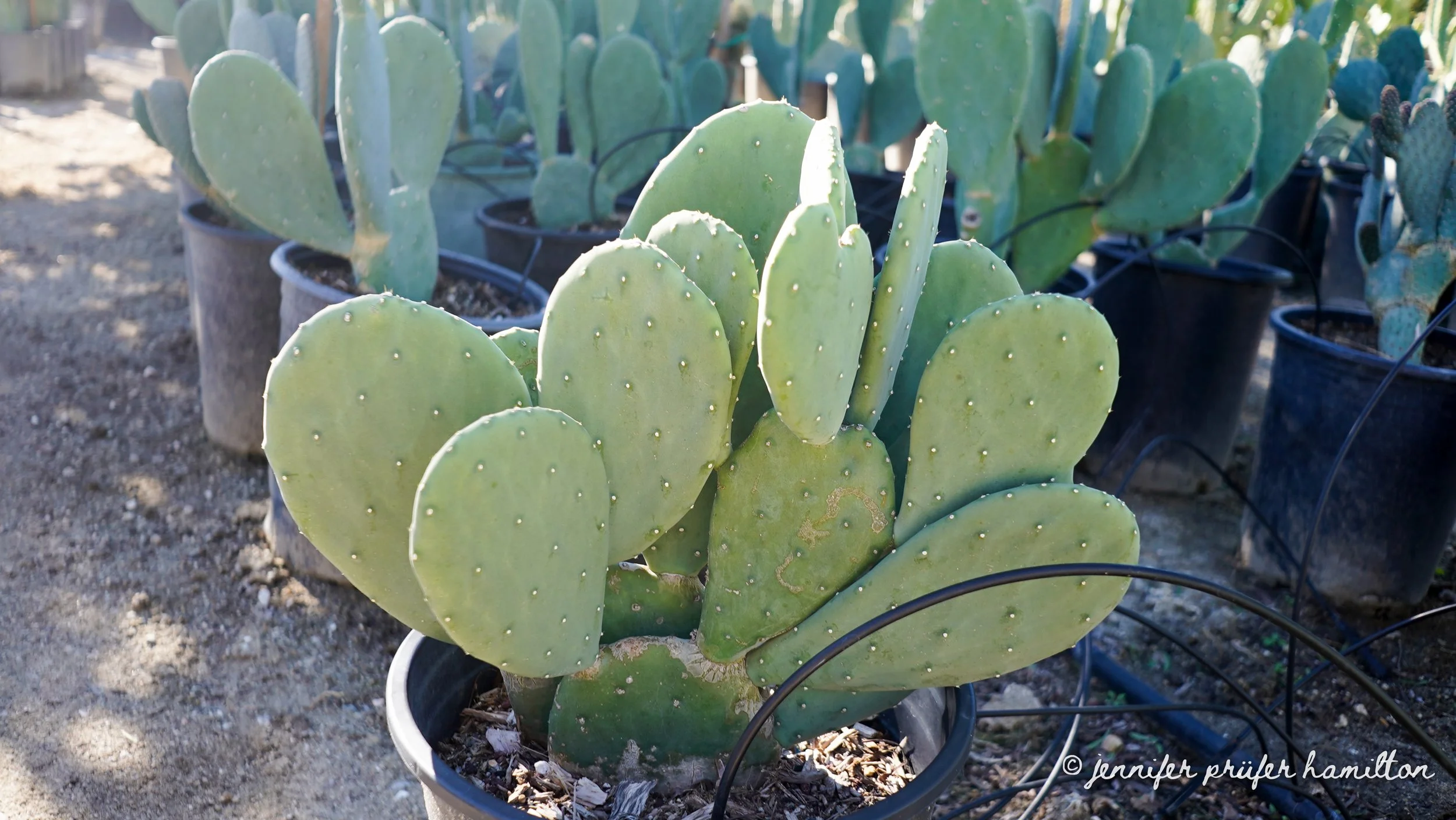
Spineless prickly pear ‘ellisiana’ for sale at the nursery
TABLE OF CONTENTS
Prickly Pear Appearance
Prickly pear grows round or oval segmented cactus pads on top of each other. The height ranges from 3 feet to 20 feet tall.
Shrub-like growth. Some very mature prickly pear grow woody bases, forming a tree-like appearance.
For the most part, prickly pear pads are green, through which they photosynthesize. The pads are succulent and help local populations by providing water during drought.
Opuntia refers to spiny plants in Greek. Many have 1-2 inch long needle-like spines, although some have very short needle-like spines or none at all. The vast majority have numerous tiny hair-like spines called glochids, which hook onto whatever the get in contact with.
Beautiful, showy flowers when in bloom. The common colors are white, yellow, orange, red, and purple. Followed by round, fleshy, dark-colored fruits that contain glochids.
Prickly Pear Landscaping Tips
Prickly pear is edible. Many people enjoy grilling the cactus pads, commonly known as nopales, and juicing the fruits, commonly known as tunas, for beverages. The fruits tend to be sweet and tart.
Very easy to propagate. Cactus pads will morph into different shapes to support the growth of the plant. For example, if you detach a round pad and leave it on soil, it can turn long and thin and root into the ground while acting as a base for other rounded cactus pads to grow out of.
Low maintenance plant. Very heat and drought tolerant. Provide supplemental water in the summer to keep it looking its best.
Protect young prickly pear from the afternoon sun during summers in the Coachella Valley.
Prickly Pear Origin
Prickly pear is from the desert regions of the Americas, from North America to South America
Prickly Pear Care
Soil: Loose, well-draining soil that is lightly fertile.
Temperature: Many varieties can withstand temperatures down to 32 degrees Fahrenheit. Cold hardy varieties include Santa Rita prickly pear and beavertail cactus.
Water: Occasional, deep watering. Allow the soil to dry out completely between waterings. Either use a moisture meter or stick your finger through the soil to gauge the moisture level. It’s better to err on the side of underwatering than overwatering.
Sun: Full sun. Partial shade is ok in the Palm Springs region.
Prickly Pear Problems
Pests: Prickly pear is susceptible to cochineal scale. To remove them, spray with a garden hose when the infestation is light. For more significant infestations, remove the most affected pads. Then, use insecticidal soap on the remaining pads.
Whenever using any pesticide, be aware that it can damage the plant if the temperatures are in the 80s or above.
Fungal diseases are caused by root rot, dry rot, and harsh weather conditions.
Signs of overwatering: Drooping, squishy texture (especially an the bottom of the cactus)
Signs of too little water: Shriveling, drying skin
Signs of too much sun: Burning, scarring
Signs of too little sun: Etiolation, discoloring
Prickly Pear Propagation
Remove cactus pads with caution since it has sharp spines and glochids. We recommend using tongs and thick fabric or newspaper.
Allow the pads to dry for a few days, and then plant into well-draining soil.
FAQ
How much does Prickly Pear cost?
At our nursery, the average prickly pear cactus costs $10 for a 1-gallon container and $35 for a 5-gallon container.
Prices are subject to change. Please get in touch with us for the most up-to-date pricing information. We may have larger sizes available. We provide installation services locally at a separate cost.
Is prickly pear edible?
The fruits and cactus pads of most prickly pear varieties are edible.
Can you grow prickly pear indoors?
Yes, you can, as long as it gets lots of bright sunlight. It will not flower readily indoors, however. South or west-facing windows would work best.
Summary
| SIZE (H X W) | Various |
|---|---|
| FLOWER COLOR | Various |
| FLOWER SEASON | Various |
| EXPOSURE | Full Sun |
| WATER | Low |
| GROWTH RATE | Moderate |
| HARDINESS | 32º F, USDA Zone 9 |
| PRUNING | None |