Snake Plant
Snake plants are some of the most popular houseplants around the world due to their striking features and ease of maintenance.
In regions with mild winters like the Palm Springs area, we can also grow them outdoors. They are just as easy to care for outside as long as they get protection from the harsh afternoon sun and enough water so that they don’t get completely dried up.
Botanical name: Dracaena trifasciata
Other names: Mother in law’s tongue, sansevieria trifasciata
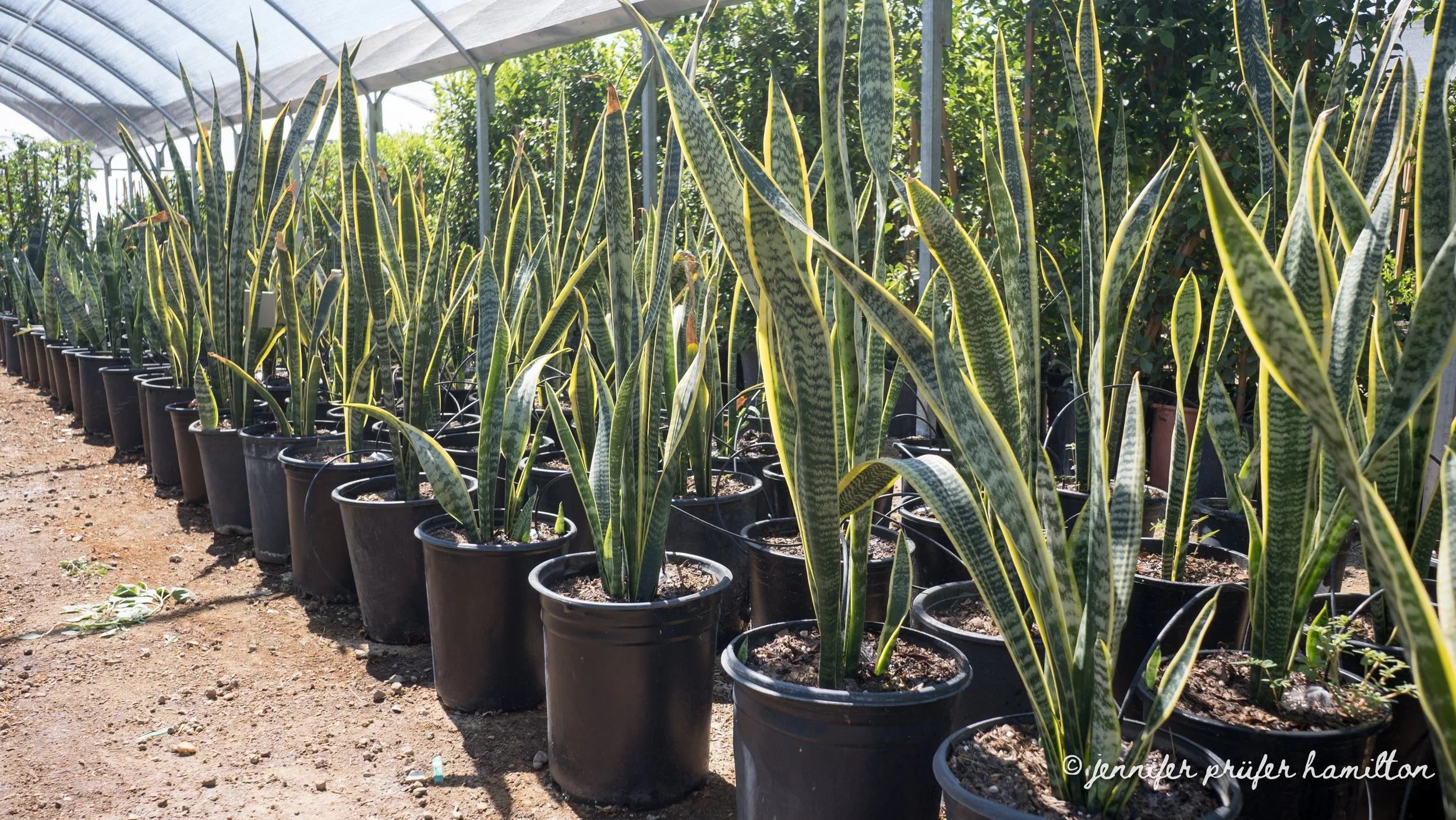
Large snake plants for sale at our nursery
TABLE OF CONTENTS
Snake plant Appearance
Snake plant is an evergreen succulent shrub from western and central Africa.
Clumping growth habit. New plants form near the base of the mother plant. Doesn’t form a trunk.
There are different varieties of snake plants. The most popular ones are the ones with white and green markings similar to a camouflage pattern and the ones with the same pattern with additional gold stripes running down the margins of the leaves.
Made up mostly of long leaves that can grow to over 5 feet tall in its original habitat, but usually about 3-4 feet tall in our region and half a foot wide.
Flat and succulent leaves are leathery to the touch. They are narrow and long and taper to pointy tips.
Small, cream-colored blooms in the cooler months. Followed by small, orange fruits.
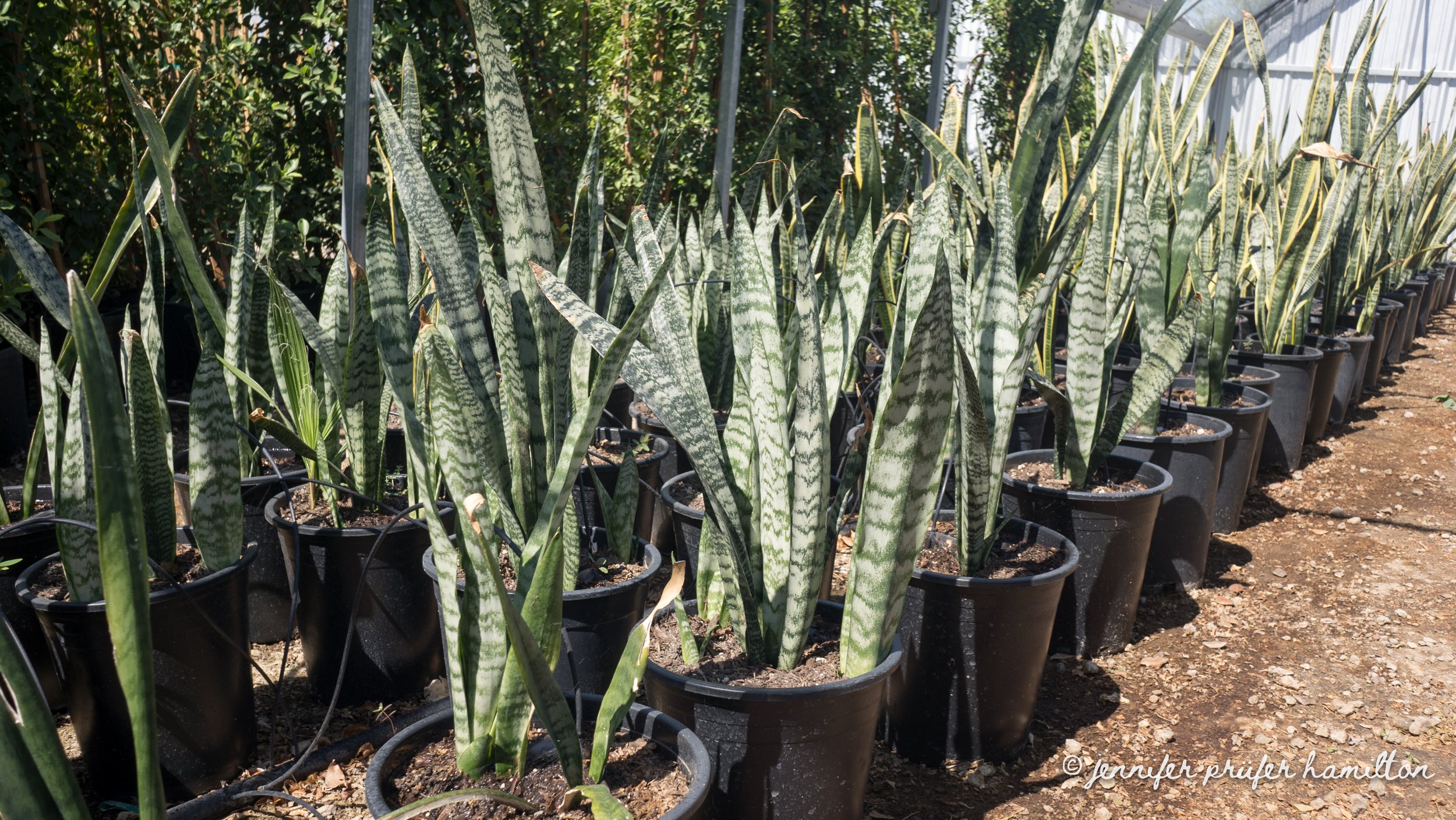
More snake plants at the nursery
Snake plant Landscaping Tips
Snake plants tolerate drought and low light and are mostly pest-resistant. Very easy to grow indoors in most home environments.
You can grow them outdoors in warm regions like the Coachella Valley. If growing outdoors, it performs best with filtered sunlight or a short period of direct sunlight (preferably in the morning) in our region. In the summer, if it looks shriveled, it needs more water and/or less sunlight.
Clumping growth habit. Can be used for ground cover.
Toxic if ingested.
Keep in planters to keep it looking tidy and architectural.
Snake plants are traditionally harvested in their native habitat in Africa for their fiber that is used for creating rope, baskets, and household items.
Snake plant Origin
Snake plant is native to warm areas in western and central Africa with fast draining soil.
Snake Plant Care
Soil: Loose, well-draining soil formulated for cacti and succulents.
Temperature: It can withstand temperatures down to 32 degrees for a short period of time.
Water: Occasional, deep watering. Allow the soil to completely dry out between waterings. Use a moisture meter or stick your finger through the soil to gauge the moisture level. It’s better to err on the side of underwatering than overwatering.
Sun: Partial shade
Snake plant Problems
Pests: Fungal diseases from root rot, dry rot, and harsh weather conditions
Signs of overwatering: Drooping, squishy texture (especially at the bottom of the snake plant)
Signs of too little water: Shriveling, drying skin
Signs of too much sun: Burning, scarring, fading color, discoloring
Signs of too little sun: Etiolation, discoloring
Snake plant Propagation
The easiest way to propagate snake plants is by division. Once it starts to form clumps, remove the new plants and plant in desired location.
FAQ
How much does a Snake plant cost?
At our nursery, snake plants cost $10 for a 1-gallon container, $20 for a 5-gallon container, and $50 for a 15-gallon container.
Prices are subject to change. Please contact us for the most up-to-date information on pricing. We may have larger sizes available. We provide installation services locally at a separate cost.
How do you get Snake plant to bloom?
During the growing season, provide the snake plant with just a little fertilizer formulated for succulents, carefully following the instructions on the label. Most indoor snake plants do not bloom due to insufficient sunlight.
Can I grow a Snake plant outdoors?
Yes, as long as the temperatures don’t get below frost frequently in your region.
Summary
| SIZE (H X W) | 4 X 0.5 feet |
|---|---|
| FLOWER COLOR | White |
| FLOWER SEASON | Irregular |
| EXPOSURE | Partial Shade |
| WATER | Low |
| GROWTH RATE | Moderate |
| HARDINESS | 32º F, USDA Zone 9 |
| PRUNING | None |