Sago Palm
Sago palm is not a true palm, but a cycad, which is an ancient group of plants that formed over a hundred million years ago. Their reproduction system is more similar to that of ferns, another ancient plant that does not produce flower and pollen.
For those that live in warm regions, many gardeners enjoy this plant for its beautiful, glossy, deep green leaves as well as its tropical look. And for those that live in cooler regions, sago palm makes for a very easy houseplant.
Botanical name: Cycas revoluta
Other names: Japanese sago palm, king sago palm, cycas inermis
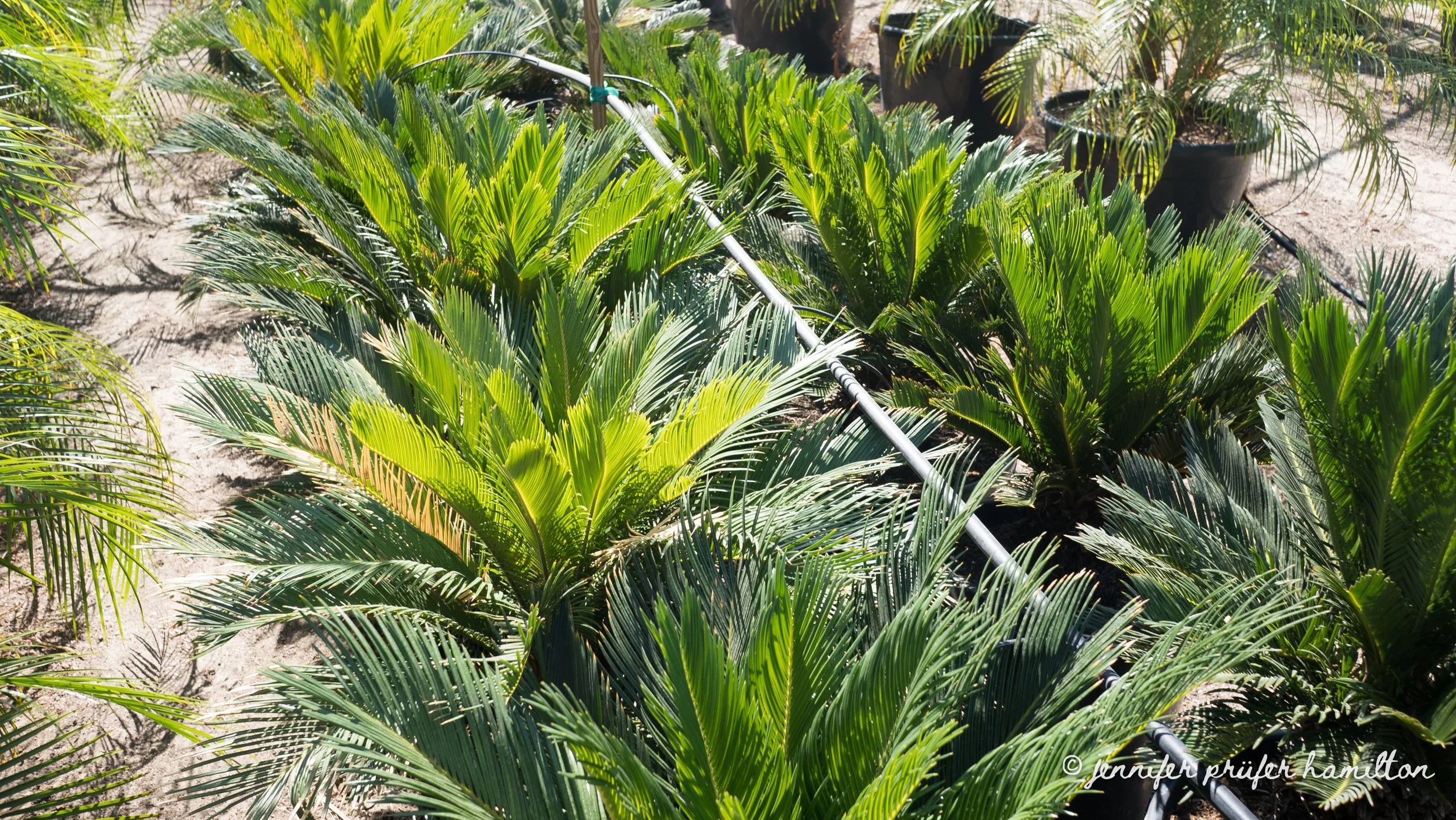
Sago palm for sale at the nursery
TABLE OF CONTENTS
Sago Palm Appearance
Sago palm is a cycad that very slowly reaches 10 to 15 feet in height.
Shiny deep green leaves grow from the crown of the trunk. They start off by resembling fern leaves that unfurl as they develop. When full grown, they resemble feathery palm fronds. The leaves reach about 4-5 feet long and half a foot wide.
Dark brown trunk that grows slowly. May grow suckers near the base.
Male trees develop 2 feet long yellow cones that look somewhat like long pine cones. Female trees develop round yellow cones.
If the female tree is fertilized, it will develop a seed head containing small, round seeds.
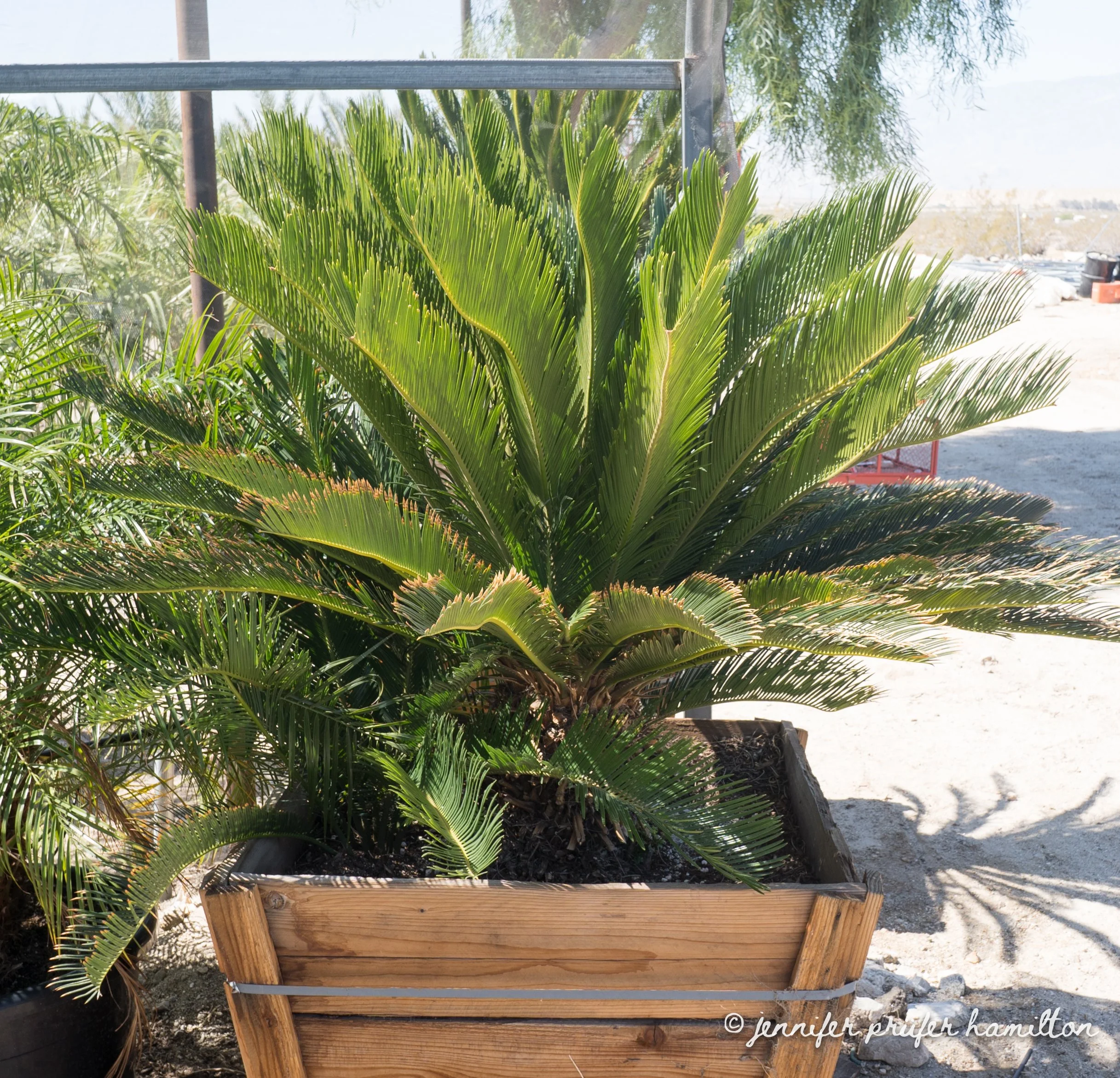
Sago palms for sale
Sago Palm Landscaping Tips
Partial shade is best for sago palm in the Palm Springs region. Protect from harsh afternoon sun. If the tips are turning brown, it’s usually an indication for leaf burn.
Good candidate for planting in atriums, near north- or east-facing facades, and beneath light-filtering tree canopies.
Makes for an easy houseplant. Provide bright light.
All parts of sago palms are highly toxic if ingested, especially the seeds. Monitor children and pets around this plant.
Drought tolerant once established.
Protect from freezing temperatures.
Be careful when handling. The leaves have sharp tips.
Requires male and female trees for reproduction.
Grows very slowly and lives a very long life.
Sago Palm Origin
Sago palm is from warm tropical and subtropical regions of Japan.
Sago Palm Care
Soil: Well-draining soil. Adaptable to a wide range of soils, including in coastal areas. We recommend using a fertilizer formulated for palm trees to keep the fronds green and healthy.
Temperature: Can withstand temperatures down to 25 degrees for a short period of time.
Water: Requires moderate water. More drought tolerant once mature. Deep, occasional watering during winter, allowing the soil to dry out. More frequent watering during the growing season and especially during heat waves.
Sun: Partial shade, preferably just the morning sun in Palm Springs region.
Sago Palm Problems
Pests: Common pests found on sago palms are mealybugs. To remove them, use insecticidal soap or apply rubbing alcohol directly to the area of the infestation using a cotton swab.
Whenever using any kind of pesticide, be aware that it can damage the plant if the temperatures are in the 80s or above.
Fungal diseases from rot and nutrient deficiencies. We recommend using fertilizer formulated for palm trees to keep it healthy and vibrant.
Signs of overwatering: Wilted fronds. Soil that never dries out.
Signs of too little water: Shriveling fronds, weak fronds
Signs of too much sun: Burning, faded color
Signs of too little sun: Etiolation, discoloring
Sago Palm Propagation
Remove ripe seeds from a female tree and plant in desired area.
FAQ
How much does Sago palm cost?
At our nursery, sago palm costs $55 for a 5-gallon container, $150 for a 15-gallon container, $350 for a 24" box, $850 for a 36” box and $2,000 for a 48” box.
Prices are subject to change. Please contact us for the most up-to-date information on pricing. We may have larger sizes available. We provide installation services locally at a separate cost.
Are Sago palms true palm trees?
No, they resemble palm trees, so they got the nickname, “sago palm,” but they are actually cycads. Unlike palm trees, sago palms and other cycads develop cones instead of flowers and use gametes instead of pollen for reproduction.
What is the lifespan of a Sago palm?
Sago palms are ancient plants that can live hundreds of years.
SUMMARY
| SIZE (H X W) | 10 feet X 10 feet |
|---|---|
| FLOWER COLOR | None |
| FLOWER SEASON | None |
| EXPOSURE | Partial Shade |
| WATER | Moderate |
| GROWTH RATE | Slow |
| HARDINESS | 25º F, USDA Zone 8 |
| PRUNING | None |