Ponytail Palm | Beaucarnea Recurvata
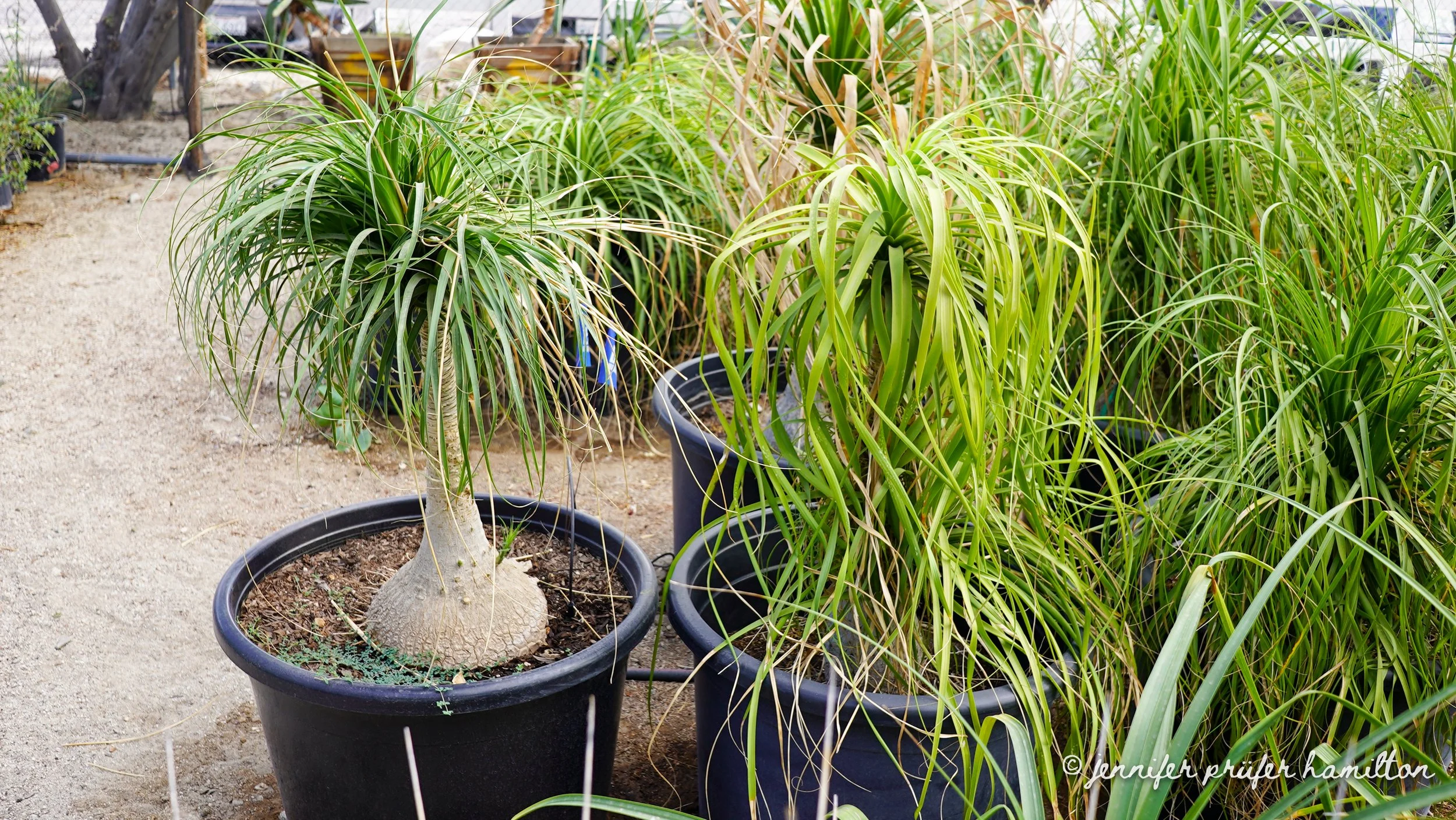


Ponytail Palm | Beaucarnea Recurvata
Although ponytail palm is more popular as a houseplant across the US, in our region, they are more commonly grown outdoors thanks to our mild winters.
Hailing from warm and dry regions in southern Mexico and Central America, ponytail palm has adapted to droughts via its distinctive swollen trunk that stores water for later use. Due to its funny shape, it has also adapted the nickname “elephant’s foot.”
Fun fact: Despite its name, ponytail palm is actually in the same plant family as bear grass rather than the true palm tree.
Botanical name: Beaucarnea recurvata
Other names: Bottle palm tree, elephant’s foot
Plants are shipped bare root. Most specimens will be single stalk. Soil used to repot should be easy draining. Water again only once soil is nearly dry.
TABLE OF CONTENTS
Ponytail Palm Appearance
Ponytail palm is a large desert tree that grows to about 30 feet tall and 10 feet wide. In its natural habitat, it can grow to 50 feet tall.
The palm is known for its distinct trunk. It is slender and gray with grooves along the surface. The bottom of the trunk protrudes from the soil and is swollen so that it can store water in preparation of a drought.
Very mature ponytail palms branch out naturally. Some gardeners purposely cut into the stem to create branches.
Dense cluster of leaves at the top of the tree. They are thin and long like ribbons and their margins have serrated edges. Depending on the age of the plant, the leaves can be 1-5 feet long. They create a weeping appearance, with the ribbons curving and creating interesting texture.
Long flower stalks with numerous tiny cream-colored flowers when in bloom. Followed by tiny brown seeds.
Ponytail Palm Landscaping Tips
Ponytail palm is a popular houseplant due to its low maintenance and interesting shape. Ensure it gets lots of bright sunlight if grown indoors.
Grows well outdoors in warm regions like Palm Springs. Well draining soil is key. Provide deep watering that reaches the bottom of the roots to keep the root system strong.
Provide shade during extreme heat for young ponytail palms to keep their leaves green.
Adds to an exotic desert landscape look due to its striking trunk and interesting cluster of leaves.
Prune dead leaves to keep plant looking tidy.
Ponytail Palm Origin
Ponytail palm is from warm and dry regions of Mexico and Central America
Ponytail Palm Care
Soil: Well-draining soil is key. Sandy loam is best. We recommend using a fertilizer formulated for cacti and succulents.
Temperature: Can withstand temperatures down to 30 degrees for a short period of time.
Water: Provide deep, occasional watering to encourage roots to grow downward and away from the surface.
Sun: Full sun or partial shade.
Ponytail Palm Problems
Pests: Ponytail palm has minimal pests. Fungal diseases from rot and nutrient deficiencies. We recommend using fertilizer formulated for palm trees to keep it healthy and vibrant.
Signs of overwatering: Wilted fronds, especially with brown tips. Soil that never dries out.
Signs of too little water: Shriveling fronds, weak fronds
Signs of too much sun: Burning, faded color
Signs of too little sun: Etiolation, discoloring
Ponytail Palm Propagation
Obtain seeds from the palm and plant in soil.
FAQ
How much does Ponytail palm cost?
At our nursery, ponytail palm costs $55 for a 5-gallon container, $150 for a 15-gallon container, $350 for a 24" box, $850 for a 36" box, and $2,000 for a 48” box.
Prices are subject to change. Please contact us for the most up-to-date information on pricing. We may have larger sizes available. We provide installation services locally at a separate cost.
Is ponytail palm a good indoor plant?
Ponytail palm is a popular houseplant due to its low maintenance and interesting shape. Ensure it gets lots of bright sunlight if grown indoors.
How tall does a ponytail palm get?
Ponytail palm typically grows to about 30 feet tall and 10 feet wide when grown outdoors. In its natural habitat, it can grow to 50 feet tall. As a houseplant, the size will be constricted by the size of the container.
SUMMARY
| SIZE (H X W) | 30 feet X 10 feet |
|---|---|
| FLOWER COLOR | White |
| FLOWER SEASON | Spring to Fall |
| EXPOSURE | Full Sun to Partial Shade |
| WATER | Low |
| GROWTH RATE | Slow |
| HARDINESS | 30º F, USDA Zone 10 |
| PRUNING | As Needed |