Organ Pipe Cactus
Organ pipe cactus grows naturally in Arizona down to Mexico. It is protected within Organ Pipe Cactus National Monument.
It’s an architectural plant with its beautiful and massive stems that grow vertically and outwards from the center. This very large cluster of stems is what gave organ pipe cactus its nickname.
Botanical name: Stenocereus thurberi
Other names: Chuhuis, pitayo dulce
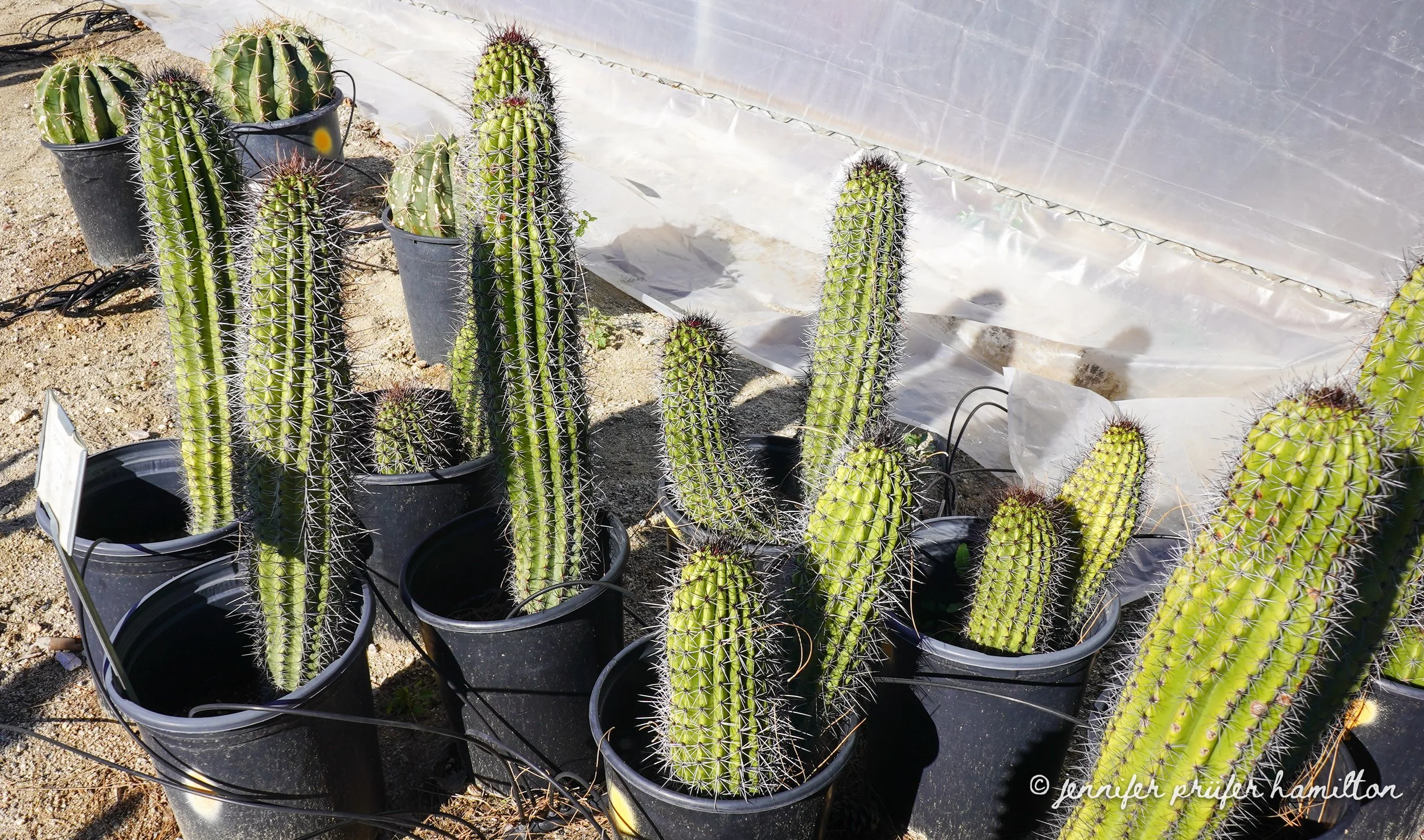
5G Organ pipe cactus for sale at our nursery
TABLE OF CONTENTS
Organ Pipe Cactus Appearance
Organ pipe cactus is a tall, columnar cactus that reaches about 15 feet in height. Grows branches once mature, forming a very large clump.
The stems are rounded and mostly vertical, sporting olive green to yellow-green depending on the amount of sunlight they receive. They are ribbed and covered in long, gray to black spines.
White flowers that are about 3 inches wide. They grow at the upper part of the plant. Multiple flowers from the same plant usually bloom at the same time, adding to the spectacle. Followed by fleshy round fruits that contain dark-colored seeds.
Organ Pipe Cactus Landscaping Tips
Organ pipe cactus is a statement plant that grabs attention due to its massive size and beautiful branches.
When planting, allow for vertical clearance. It grows to be more than 15 feet tall. Give it some room to spread horizontally as well since it grows lots of branches from the base.
Organ pipe cactus can live to over 100-150 years old.
The flowers and fruits are edible and have a sweet flavor. Commonly used for juice, wine, and dried fruit by native people.
Flowers bloom at night and are pollinated by bats, bees, and birds.
Organ Pipe Torch Cactus Origin
Organ pipe cactus is from desert regions of Arizona and northern Mexico.
Organ Pipe Cactus Care
Soil: Loose, well draining soil that is moderately fertile.
Temperature: Can withstand temperatures slightly below frost (frost = 32 degrees Fahrenheit) for a brief period of time.
Water: Occasional, deep watering. Allow the soil to completely dry out between waterings. Either use a moisture meter or stick your finger through the soil to gauge the moisture level. It’s better to err on the side of underwatering than overwatering.
Sun: Full sun. Partial shade for young plants in the Coachella Valley.
Organ Pipe Cactus Problems
Pests: The most common pests that organ pipe cactus gets are spider mites. To remove them, use horticultural oil for crawlers and insecticidal soap for mites of all stages. Whenever using any kind of pesticide, be aware that it can damage the plant if the temperatures are in the 80s or above.
Fungal diseases from root rot, dry rot, and harsh weather conditions.
Signs of overwatering: Drooping, squishy texture (especially an the bottom of the cactus)
Signs of too little water: Shriveling, drying skin
Signs of too much sun: Burning, scarring
Signs of too little sun: Etiolation, discoloring
Organ PipeCactus Propagation
Cut off a branch using a sharp blade to propagate. Allow it to callus, then plant in soil.
FAQ
How much does Organ Pipe Cactus cost?
At our nursery, organ pipe cactus costs $35 for a 5-gallon container, $120 for a 15-gallon container, and $350 for a 25-gallon.
Prices are subject to change. Please contact us for the most up-to-date information on pricing. We may have larger sizes available. We provide installation services locally at a separate cost.
HOW FAST DOES organ pipe cactus GROW?
Organ pipe cactus grows slowly, usually just a few inches a year. Provide occasional deep watering in the summer to mimic the monsoon season for quicker growth.
Why is my organ pipe cactus not blooming?
Assuming the cactus is healthy, it is probably not blooming because it is too young. It needs to be about 30 year old to start blooming.
Summary
| SIZE (H X W) | 15 feet X 15 feet |
|---|---|
| FLOWER COLOR | White |
| FLOWER SEASON | Late Spring |
| EXPOSURE | Full Sun |
| WATER | Low |
| GROWTH RATE | Slow |
| HARDINESS | 25º F, USDA Zone 9 |
| PRUNING | None |