Moroccan Mound | Euphorbia Resinifera


Moroccan Mound | Euphorbia Resinifera
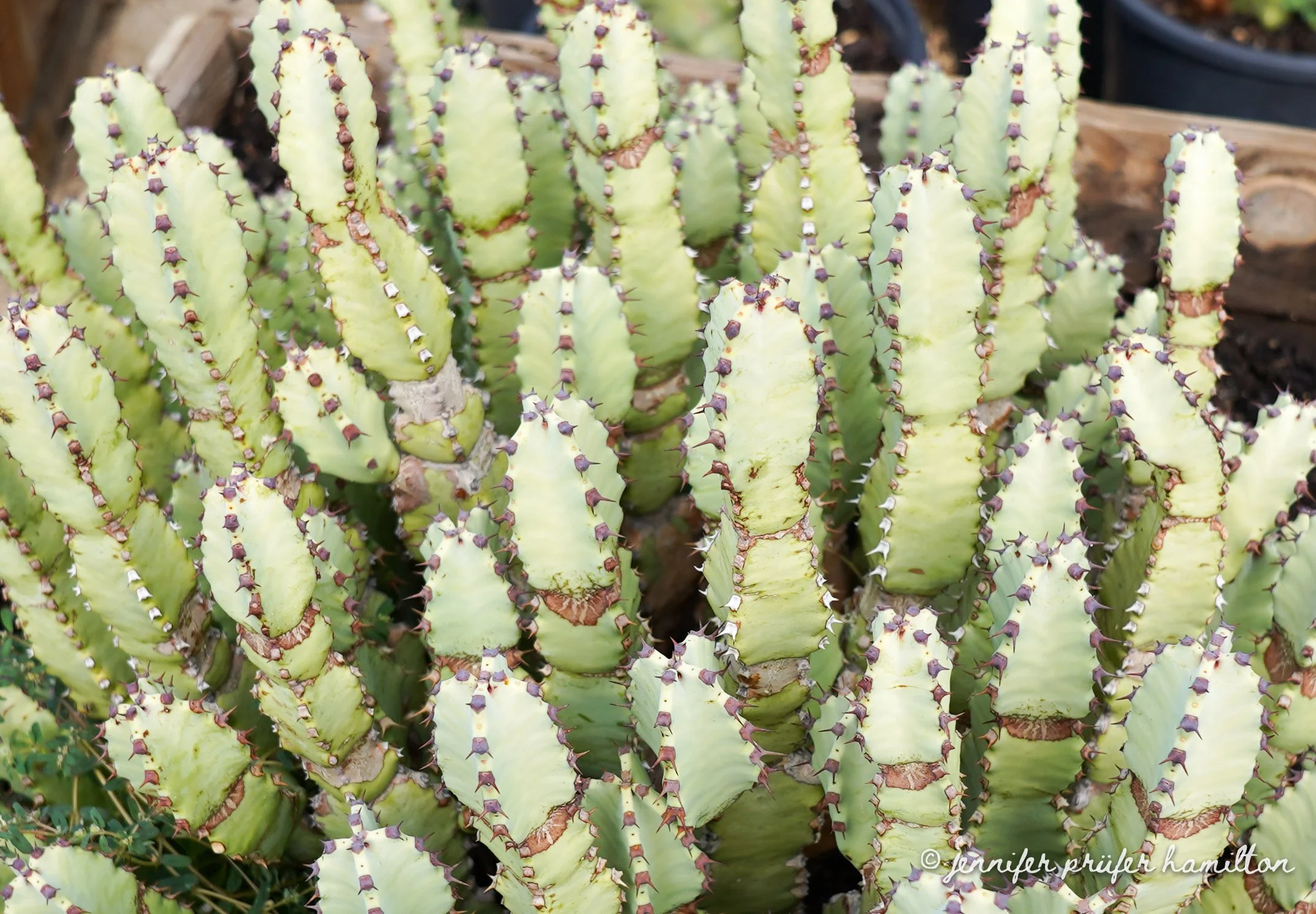
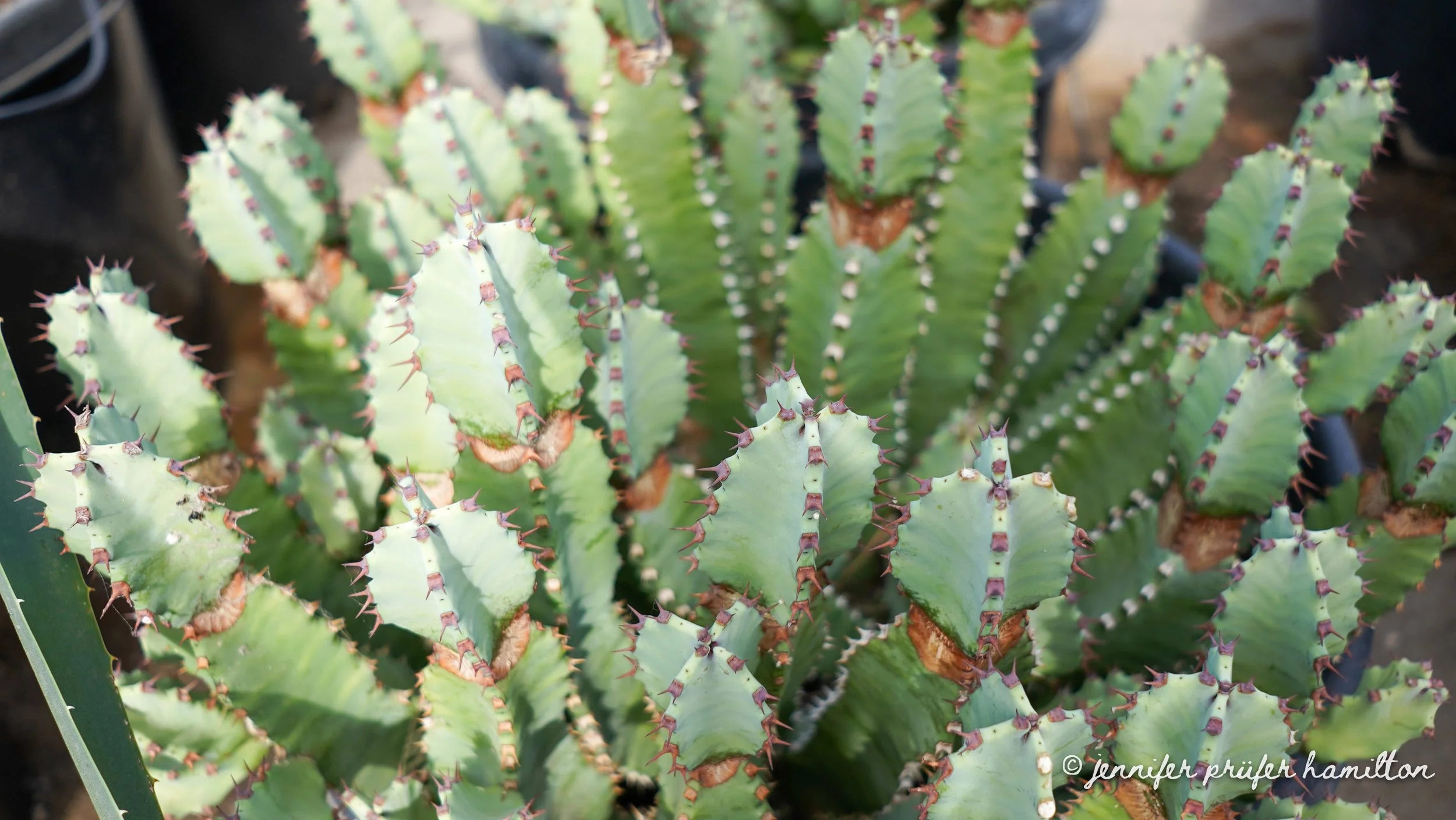
Moroccan mound is a fun euphorbia that looks like a colony of tightly packed stems.
It slowly grows to a low growing clump that reaches about 1-2 feet in height and 3 feet in width, staying at a manageable size.
If you’re looking for an uncommon desert plant that does well in Palm Springs, Moroccan mound may be a great candidate for you.
Botanical name: Euphorbia resinifera
Other names: Moroccan spurge, resin spurge
Plants are shipped bare root.. Soil used to repot should be easy draining. Water again only once soil is nearly dry. Euphorbias contain a milkly sap that will irritate skin on contact, please handle with care.
TABLE OF CONTENTS
Moroccan Mound Appearance
Moroccan mound is a slow spreading euphorbia that reaches about 1-2 feet tall and 3-4 feet wide. It is made up of many tall and thin stems that grow up and outward. Some stems grow branches.
—————
A quick word on euphorbias vs cacti: euphorbias, including the Moroccan mound, are often confused with cacti. Most euphorbias are from Africa, while most cacti are from the Americas. Even though they are not related, they have evolved in similar ways of surviving the heat and drought, hence the similarities.
The easiest way to tell the two apart are from looking at the spines. If you look closely at the Moroccan mound, you'll see that the stems themselves have thorny edges. If you cut it off, white poisonous sap can emerge. If you look at a cactus, you'll see that the spines grow from areoles independently, and you can cut off the spines without damaging the actual stem of the cactus.
—————
Each stem is made of 4 ridges. The margins are bumpy and protrude where the spines are.
Overall light green color with short orange-brown spines. The stems contain toxic white sap. The name resinifera refers to the substance found in the sap.
Tiny yellow flowers when in bloom. Followed by dark fruits.
Moroccan Mound Landscaping Tips
Moroccan mound has a very distinct growing habit. Its cluster of small stems is tightly packed. Makes for a good candidate for a rock garden.
Use to add distinct color and texture to a desert garden. Can be used in small gardens due to its compact form.
Looks and performs great in containers.
The spines are very short, but be aware that the stems have poisonous, white sap. Handle with caution.
Moroccan Mound Care
Soil: Loose, well draining soil that is lightly fertile.
Temperature: Can withstand temperatures down to 20 degrees for a short period of time.
Water: Occasional, deep watering. Allow the soil to completely dry out between waterings. Either use a moisture meter or stick your finger through the soil to gauge the moisture level. It’s better to err on the side of underwatering than overwatering.
Sun: Full sun to partial shade
Moroccan Mound Problems
Pests: Moroccan mound has minimal pests. Fungal diseases from root rot, dry rot, and harsh weather conditions.
Signs of overwatering: Drooping, squishy texture
Signs of too little water: Shriveling, drying skin
Signs of too much sun: Burning, scarring, fading color
Signs of too little sun: Etiolation, discoloring.
Moroccan Mound Propagation
Propagate by using a blade to cut off a stem. Use gloves and handle with caution since the sap is toxic.
Allow the stem to callus, then plant in moist soil.
FAQ
How much does Moroccan Mound cost?
At our nursery, Moroccan mound costs $15 for a 1-gallon container, $45 for a 5-gallon container, $150 for a 15-gallon container, and $350 for a 24" box.
Prices are subject to change. Please contact us for the most up-to-date information on pricing. We may have larger sizes available. We provide installation services locally at a separate cost.
Does Moroccan Mound flower?
Yes, you will see tiny yellow flowers alongside the stems when it blooms.
HOW fast does a moroccan mound grow?
It grows slowly. From a starter plant, it will reach its ultimate spread in about 5-10 years.
Summary
| SIZE (H X W) | 2 X 3 feet |
|---|---|
| FLOWER COLOR | Yellow |
| FLOWER SEASON | Spring |
| EXPOSURE | Full Sun/Partial Shade |
| WATER | Low |
| GROWTH RATE | Slow |
| HARDINESS | 20º F, USDA Zone 8 |
| PRUNING | None |