Joshua Tree
Joshua tree is the most well-known plant in the yucca family due to its depiction in album covers, music videos, and movies. It is easily identifiable due to its unusual shape, texture, and stance.
Luckily, many of us in the Coachella Valley have the right environment to be able to grow this iconic plant right in our backyards.
Botanical name: Yucca brevifolia
Other names: Tree yucca
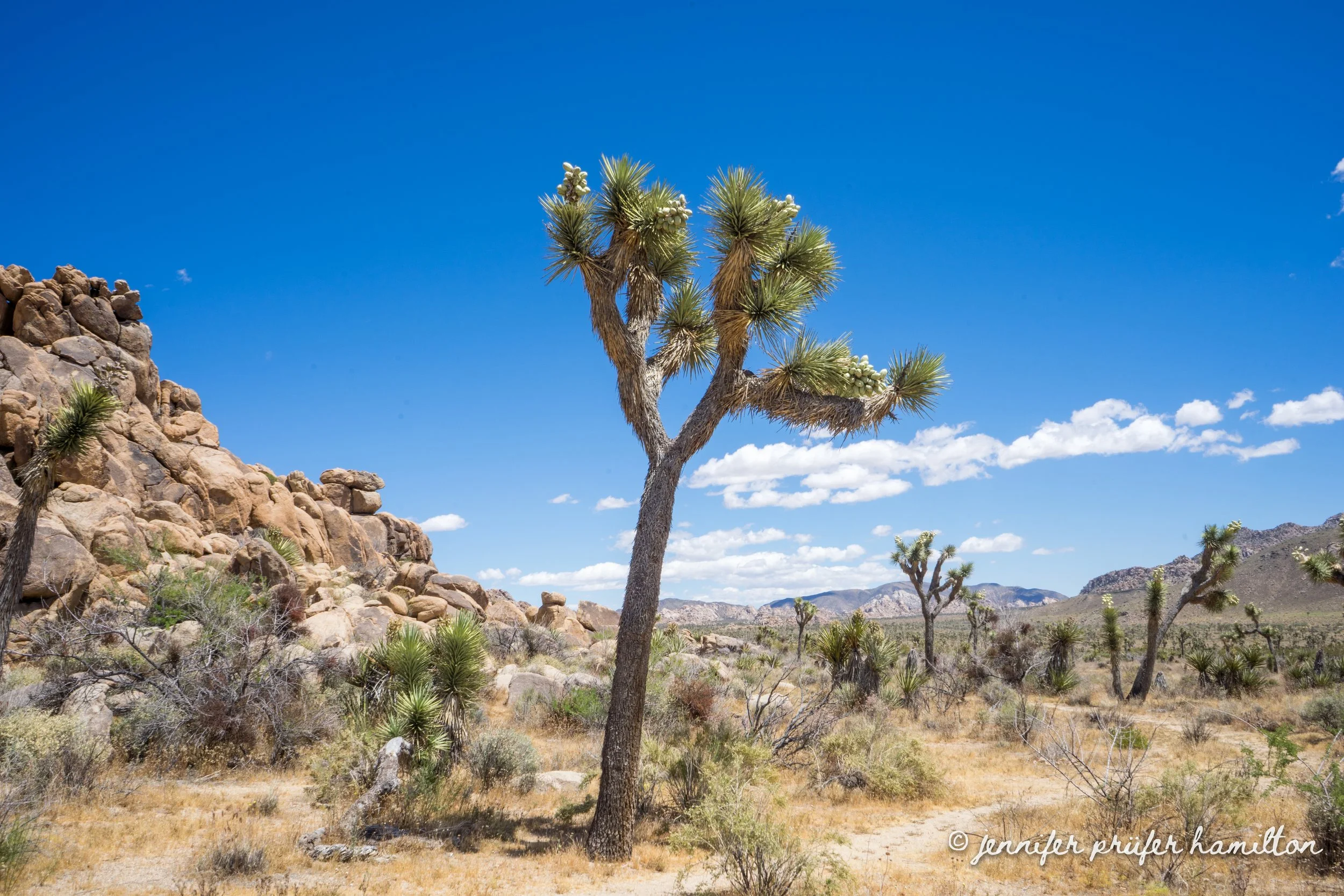
Blooming Joshua trees at Joshua Tree National Park
TABLE OF CONTENTS
Joshua Tree Appearance
Joshua trees are succulents that grow tall and develop wooden trunks over time, but are not true trees.
They typically grow to about 30 feet tall and 15 feet wide. Some exceptionally tall Joshua trees can reach over 50 feet in height. Many mature Joshua trees have branches.
Narrow and long muted green leaves have sharp points at the end. They grow in clusters at the top of the trees from the center of the branch. As new leaves emerge at the top, the old ones dry out and hang over the trunk, creating a similar appearance to palm tree skirts.
Typically blooms in early spring. Flower clusters grow from the tip of the branches. The flowers are rounded and cream-colored. Followed by green seedpods.
Joshua Tree Landscaping Tips
Joshua trees have become well known due to their depiction in media and the popularity of Joshua Tree National Park. They are mainly found in the higher-elevation Mojave Desert area of the park, where it is slightly cooler.
Experts believe many Joshua trees in the National Park will die due to rising temperatures and drought.
Requires winter dormancy for blooming in the spring.
Joshua trees are a protected species under different state and regional laws.
Tends to undergo transplant shock. Dig a deep and wide hole and try to plant the entire tree with its roots as undisturbed as possible. Do not repot often.
Protect young Joshua trees from the afternoon sun during triple-digit heat.
Joshua trees have a long lifespan and can live well over 100 years. One tree at the national park is estimated to be almost a thousand years old.
Supports local wildlife like moths, birds, and lizards.
Was traditionally used by the Cahuilla for its food and tough fiber.
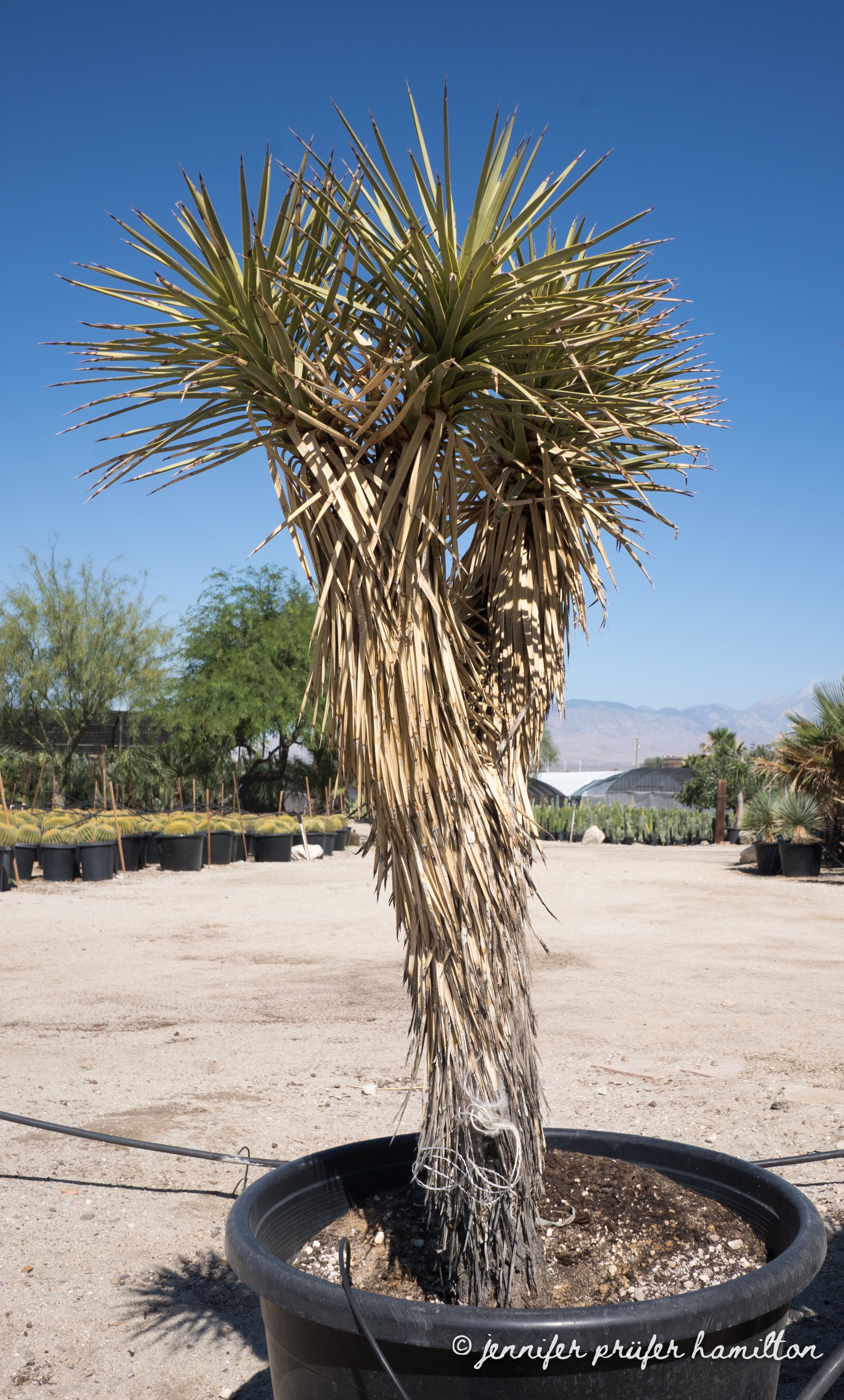
Joshua tree for sale at our nursery
Joshua Tree Origin
Joshua tree is from slightly elevated regions of the Mojave Desert across Arizona, California, Nevada, and Utah.
Joshua Tree Care
Soil: Loose, well draining soil
Temperature: Can withstand temperatures down to 15 degrees for a short period of time.
Water: Occasional, deep watering. Allow the soil to completely dry out between waterings. Either use a moisture meter or stick your finger through the soil to gauge the moisture level. It’s better to err on the side of underwatering than overwatering.
Sun: Full sun. Provide shade in the summer for young plants.
Joshua Tree Problems
Pests: Joshua trees has minimal pests. Fungal diseases from root rot, dry rot, and harsh weather conditions.
Signs of overwatering: Drooping, squishy texture (especially an the bottom of the tree)
Signs of too little water: Shriveling leaves and stems
Signs of too much sun: Burning, fading color
Signs of too little sun: Etiolation, discoloring
Joshua Tree Propagation
Once it has created seed pods, wait for them to ripen. Plant seeds in moist soil.
FAQ
How much does Joshua Tree cost?
At our nursery, Joshua trees are sold at $350 by the foot.
Prices are subject to change. Please contact us for the most up-to-date information on pricing. We may have larger sizes available. We provide installation services locally at a separate cost.
How fast do Joshua Trees grow?
Joshua trees, like most yuccas, grow very slowly, at about 2 inches a year.
Why is it called a joshua tree?
Mormons traveling and settling out West named Joshua tree after Joshua from the Bible.
SUMMARY
| SIZE (H X W) | 30 feet x 15 feet |
|---|---|
| FLOWER COLOR | White |
| FLOWER SEASON | Spring |
| EXPOSURE | Full Sun |
| WATER | Low |
| GROWTH RATE | Slow |
| HARDINESS | 15º F, USDA Zone 8 |
| PRUNING | None |