Foxtail Fern
Like many ferns, foxtail fern is prized for its beautiful evergreen leaves that have an interesting texture and pattern. However, it is not a true fern and is in the asparagus family.
Another fun fact: although it looks like it could belong in a lush forest, it is actually from drier coastal regions in southern Africa with mild temperatures.
Botanical name: Asparagus densiflorus ‘Myersii’
Other names: Myers fern
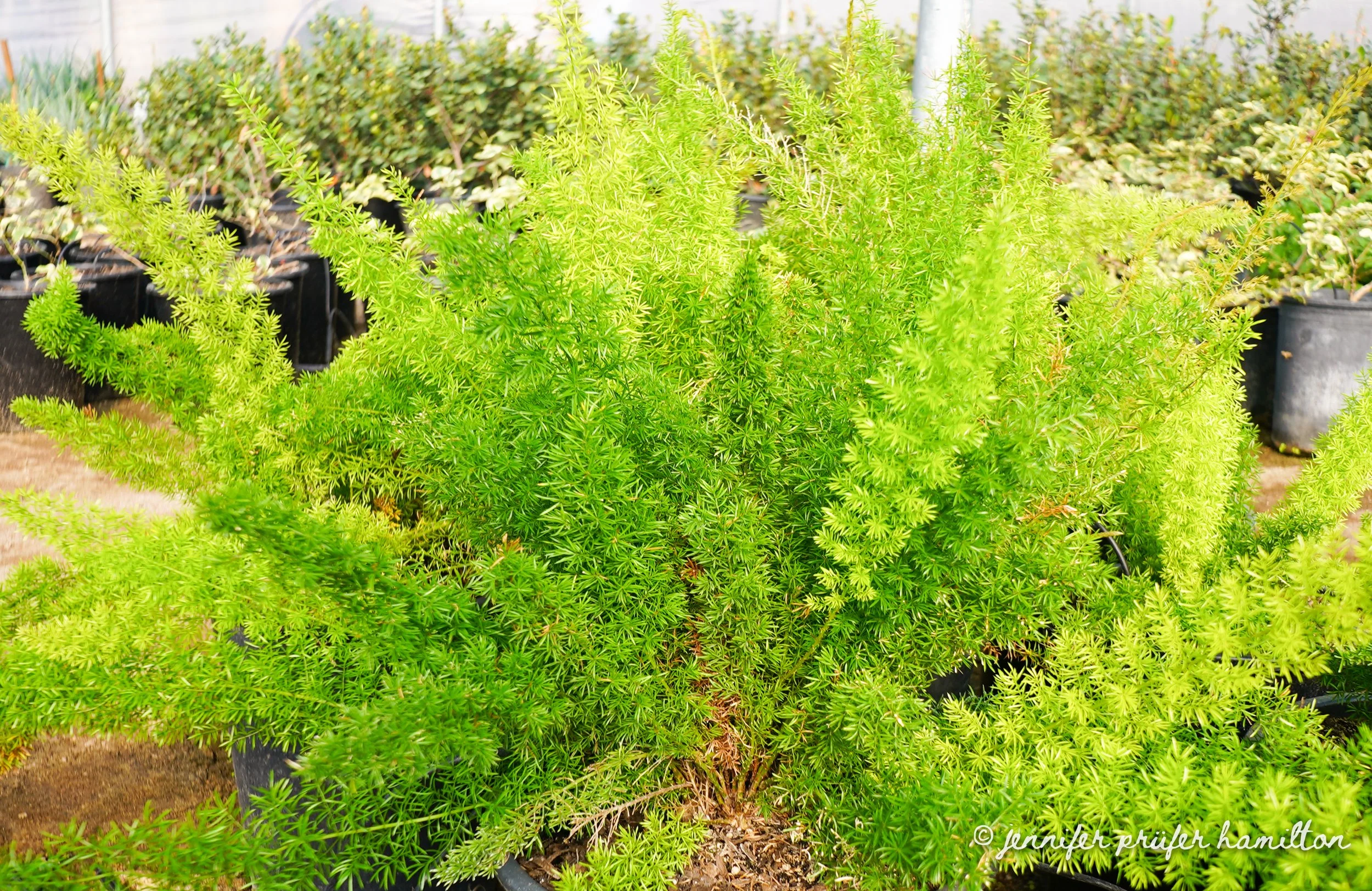
Foxtail fern for sale at the nursery
TABLE OF CONTENTS
Foxtail Fern Appearance
Foxtail fern is an evergreen shrub that reaches about 3 feet in height and 4 feet in width.
This ornamental shrub is prized for its densely-packed, bright green leaves that give it a fluffy appearance. The leaves are thin and narrow, which is why it has the word “fern” in its nickname.
The flexible stems grow upwards and sideways from the center. Tuberous roots help store water.
Does not bloom every year. When it does, it creates tiny, white flowers. Followed by green berries.
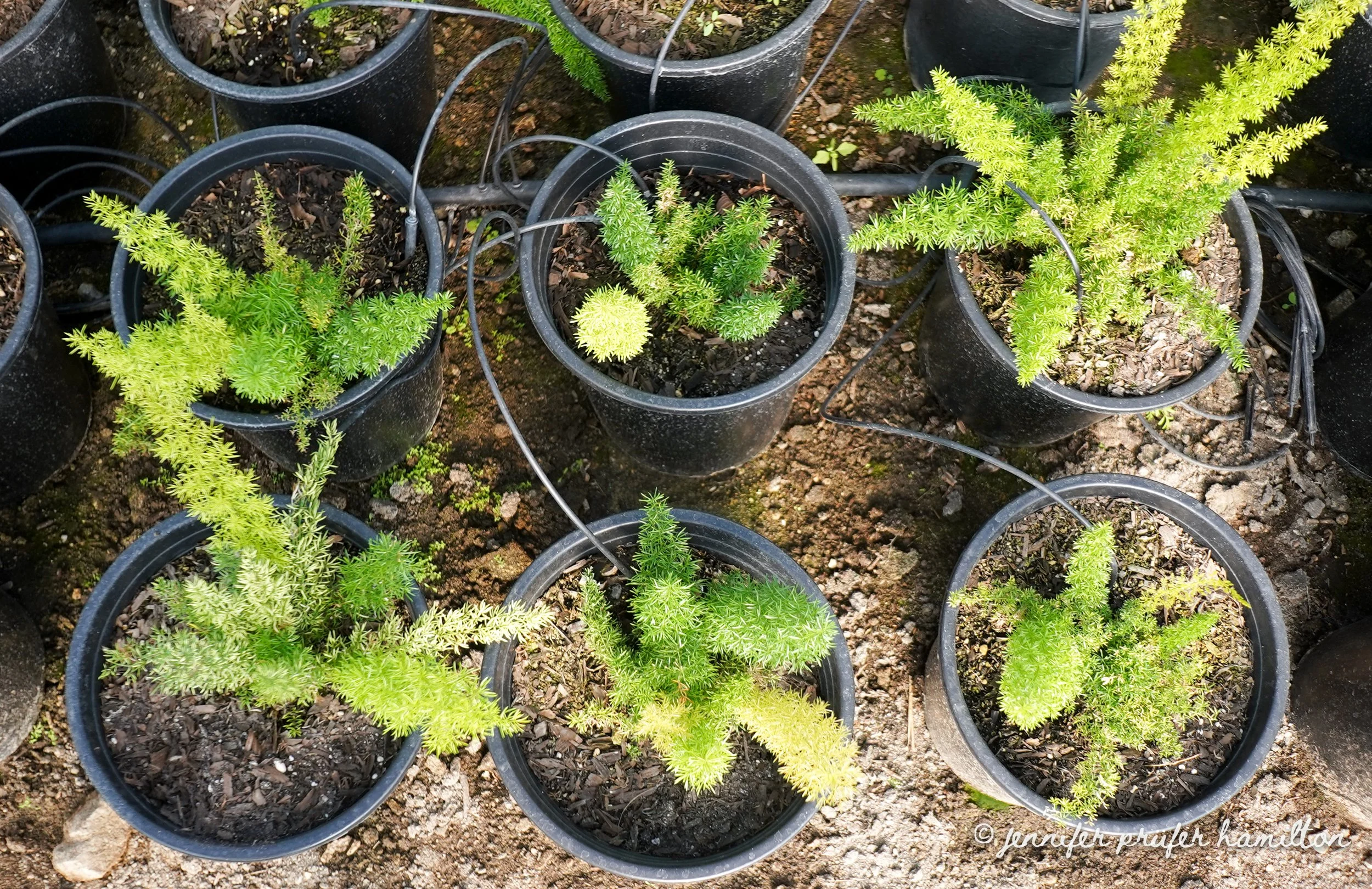
Foxtail fern for sale
Foxtail Fern Landscaping Tips
Popular plant for floral arrangements. Use to create a full and lush look.
Partial to full shade in the Palm Springs region. Some morning sun and no afternoon sun would be best.
Only grows to about 3 feet tall, making it a good candidate for planting near the house and buildings. Plant near north and east-facing walls.
Makes for a great houseplant in large areas. Bright to medium sun works best.
Keep in a container and bring indoors if you live in a region with temperatures that get below freezing.
Berries are toxic if ingested. Keep away from curious children and pets.
Foxtail Fern Origin
Foxtail fern is from regions with mild weather in southern Africa.
Foxtail Fern Care
Soil: Well-draining soil that is moderately fertile. Moss or mulch near the surface would help it to stay cool.
Temperature: Performs best in areas with mild winters, USDA zones 9 or higher.
Water: Requires moderate watering. Allow the soil to dry out between waterings. More drought tolerant once mature.
Sun: Partial to full shade in the Palm Springs region. Protect from afternoon sun.
Foxtail Fern Problems
Pests: Foxtail fern may attract spider mites. To remove them, use horticultural oil for crawlers and insecticidal soap for mites of all stages.
Whenever using any kind of pesticide, be aware that it can damage the plant if the temperatures are in the 80s or above.
Fungal diseases include root rot, dry rot, and harsh weather conditions.
Signs of overwatering: Drooping, squishy texture, browning or yellowing leaves
Signs of too little water: Shriveled leaves, leaf fall, browning or yellowing leaves
Signs of too much sun: Burning, fading leaves
Signs of too little sun: Etiolation, discoloration
Foxtail Fern Propagation
To propagate foxtail fern, divide up the clumps and relocate them.
FAQ
How much does foxtail fern cost?
At our nursery, foxtail fern costs $20 for a 5-gallon container and $50 for a 15-gallon container.
Prices are subject to change. Please contact us for the most up-to-date information on pricing. We may have larger sizes available. We provide installation services locally at a separate cost.
Why is my foxtail fern turning yellow?
It is stressed. If it’s only a branch or two, you can prune them. If that’s not the case, if grown outdoors in the Coachella Valley, it is probably due to too much sun and too little water if it’s happening during the summer or due to temperatures that are too low during the winter. If it was once happy and green and is now turning yellow as it ages, provide fertilizer with nitrogen.
What is the difference between foxtail fern and asparagus fern?
Although they do look similar, one main difference they have is that the foxtail fern grows more upright, while the asparagus fern cascades to the ground.
Summary
| SIZE (H X W) | 3 feet x 4 feet |
|---|---|
| FLOWER COLOR | White |
| FLOWER SEASON | Irregular |
| EXPOSURE | Partial Shade |
| WATER | Moderate |
| GROWTH RATE | Moderate |
| HARDINESS | 30º F, USDA Zone 9 |
| PRUNING | As Needed |