Fountain Grass
Fountain grass is an ornamental grass that is prized for its beautiful purple color, vigor, and ease of maintenance. It grows in poor soil and tolerates heat and drought.
The tiny seeds do disperse far away and the plant readily self-sows, so please be cautious when choosing a site for this grass.
Botanical name: Pennisetum setaceum
Other names: Cenchrus setaceus, purple fountain grass
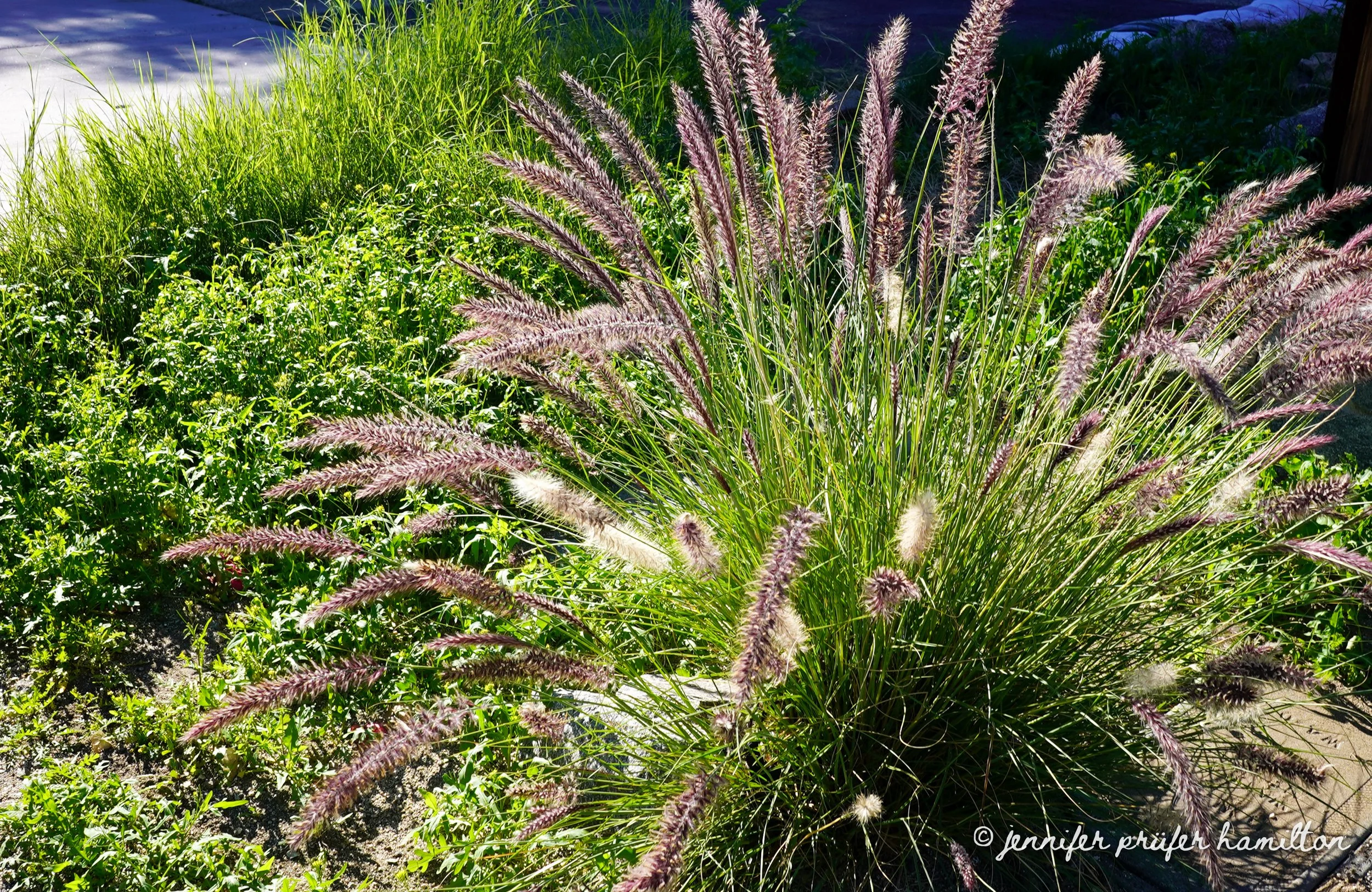
Fountain grass in a garden
TABLE OF CONTENTS
Fountain Grass Appearance
Fountain grass is an evergreen ornamental grass that typically grows to 3-4 feet in height and forms clumps that reaches about 5 feet wide.
It has tall and thin green leaves that are tough. They grow to 1-2 feet in height.
The purple or green feathery flower stalks are taller, at about 3-4 feet in height. They typically grow vertically and arch sideways.
Blooms are followed by numerous tiny red or white seeds that disperse in the wind.
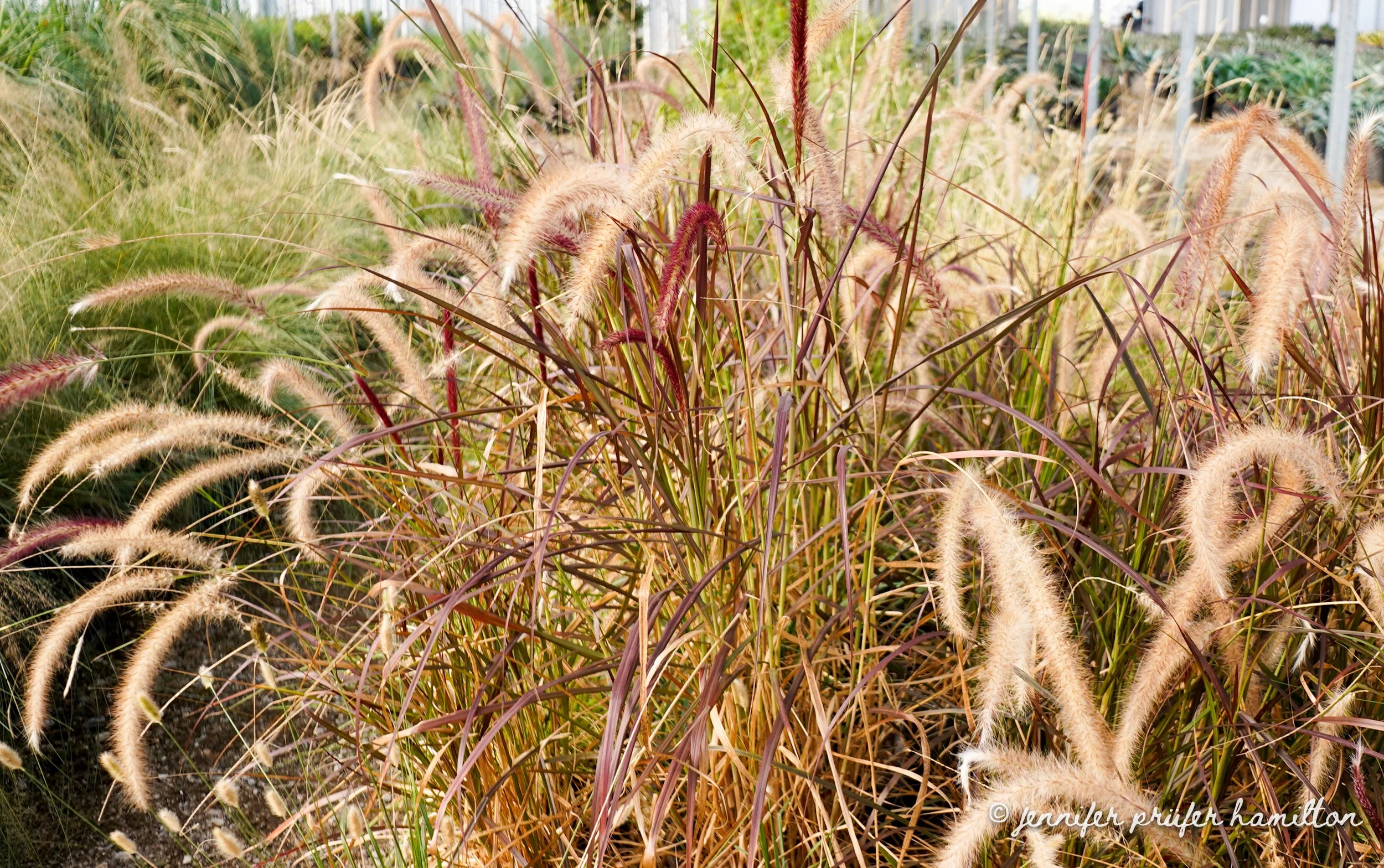
Fountain grass for sale at the nursery
Fountain grass Landscaping Tips
Adds color, movement, and texture to the garden.
Very low maintenance. Tolerates frost, heat, and drought and does not attract pests.
Considered invasive in many parts of the state and country. Do not plant near natural preserves. Do not plant near high fire zones. It is flammable and spreads fire.
Prune in late winter. The entire clump can be cut back to a foot tall and keeps the plant manageable.
Evergreen in our region.
Fountain Grass Origin
Fountain grass is from warm areas of northern Africa
Fountain Grass Care
Soil: Loose, well-draining soil.
Temperature: Can withstand temperatures down to 15 degrees for a short period of time.
Water: Fountain grass is drought tolerant once mature. Allow the soil to dry out between waterings. Either use a moisture meter or stick your finger through the soil to gauge the moisture level.
Sun: Full sun or partial shade in Palm Springs region.
Fountain Grass Problems
Pests: Fountain grass is mostly pest-resistant.
Signs of overwatering: Wilting stems, rot.
Signs of too little water: Shriveling, drying skin
Signs of too much sun: Burning, scarring, fading color
Signs of too little sun: Etiolation, lack of flowers
Fountain Grass Propagation
The easiest way to propagate fountain grass is through division. Dig up a part of the grass clump and relocate to a new location. Water well.
FAQ
How much does Fountain Grass cost?
At our nursery, fountain grass costs $10 for a 1-gallon container and $20 for a 5-gallon container.
Prices are subject to change. Please contact us for the most up-to-date pricing information. We may have larger sizes available. We provide installation services locally at a separate cost.
Does fountain grass come back every year?
It can be an annual or perennial depending on how cold your winter gets. In the Palm Springs region, where we get mild winters, it is an evergreen perennial.
Does fountain grass perform well in the desert?
Yes, fountain grass tolerates extreme heat as well as below frost temperatures. It is also drought tolerant once mature, but regular watering will keep it looking healthy and full.
Summary
| SIZE (H X W) | 3-4 feet x 5 feet |
|---|---|
| FLOWER COLOR | White |
| FLOWER SEASON | Year-round |
| EXPOSURE | Full Sun |
| WATER | Low |
| GROWTH RATE | Moderate |
| HARDINESS | 15º F, USDA Zone 7 |
| PRUNING | As Needed |