Flax Lily
Flax lily may sound like a plant that’s admired for its flowers, but many gardeners actually use it as an evergreen ground cover.
It has gracefully drooping thick leaves that add greenery to the scene whether via its standard solid green color or variegated green and cream-colored stripes.
And of course, when it blooms, its beautiful blue-purple or white flowers are pretty to look at as well.
Botanical name: Dianella tasmanica
Other names: Tasman flax lily, Tasmanian flax lily
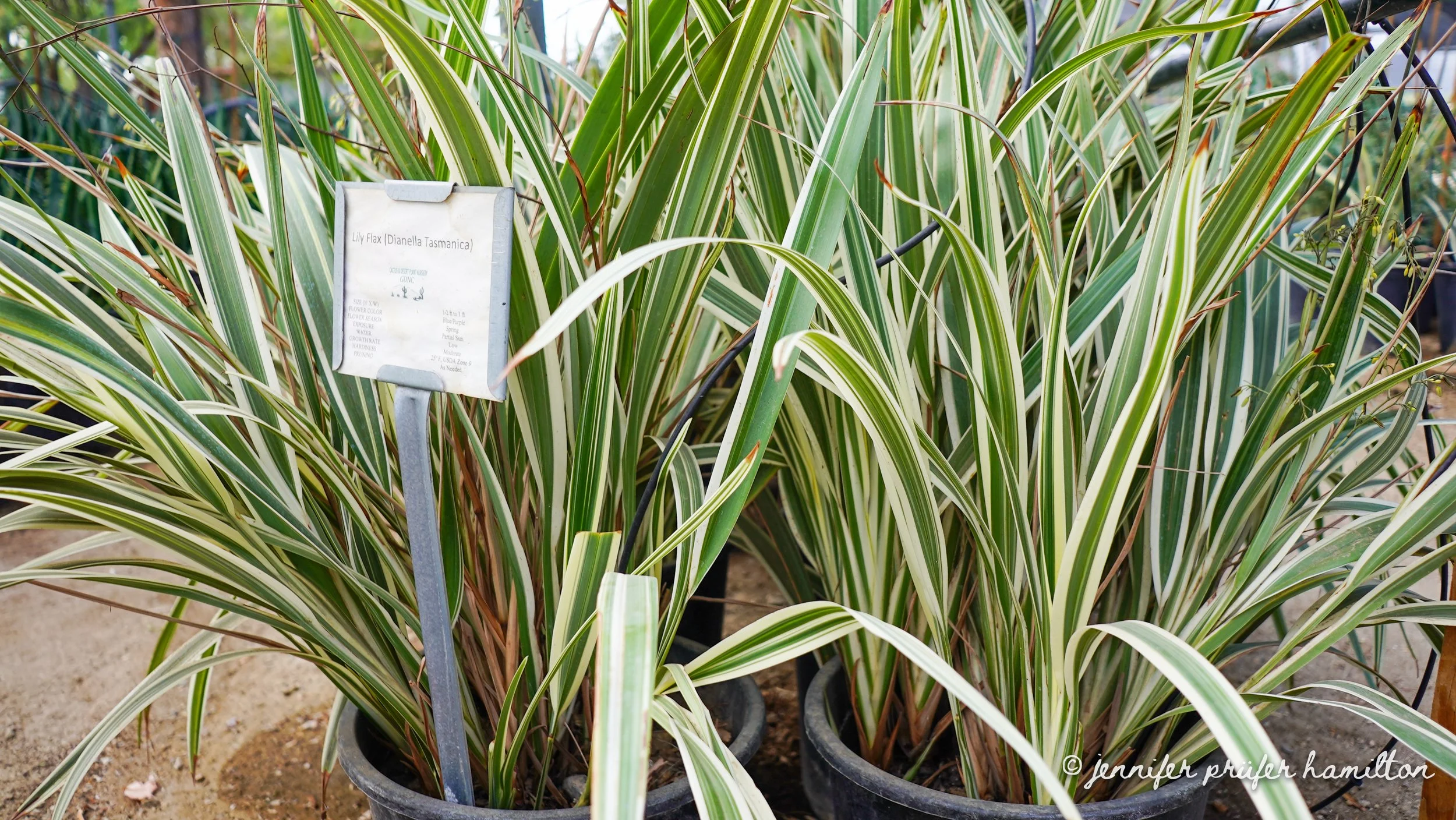
Flax lily for sale
TABLE OF CONTENTS
Flax Lily Appearance
Flax lily is a small flowering sedge that reaches 2 feet in height and 3 feet in width.
Clumping growth habit. Underground stems called rhizomes send out runners to spread and grow new plants.
Long and narrow leaves that taper at the end. They grow tall from the center and arch to the side.
Evergreen leaves provide beautiful color to the garden year-round even when not in bloom. The standard flax lily has medium green leaves. The variegated flax lily has medium green leaves with cream-colored stripes.
Small blue-purple flowers grow in clusters at the end of flowering stalks on the standard flax lily. Variegated flax lilies have white flowers.
Followed by small, blue fruits containing seeds.
Flax Lily Landscaping Tips
Although flax lily is a flowering shrub, most gardeners use it as a ground cover due to its beautiful evergreen leaves in regions with mild winters.
Performs well in partial shade in warm regions. Great for planting under trees.
Plant underneath palm trees to enhance a tropical look.
Works well as an edging plant due to its compact form. Plant alongside a walking path or facade of a building.
Prune dead or damaged leaves to keep plant tidy.
Does not fare well with frost, but may bounce if the frost damage is not severe. Cut the plant back for new growth in spring.
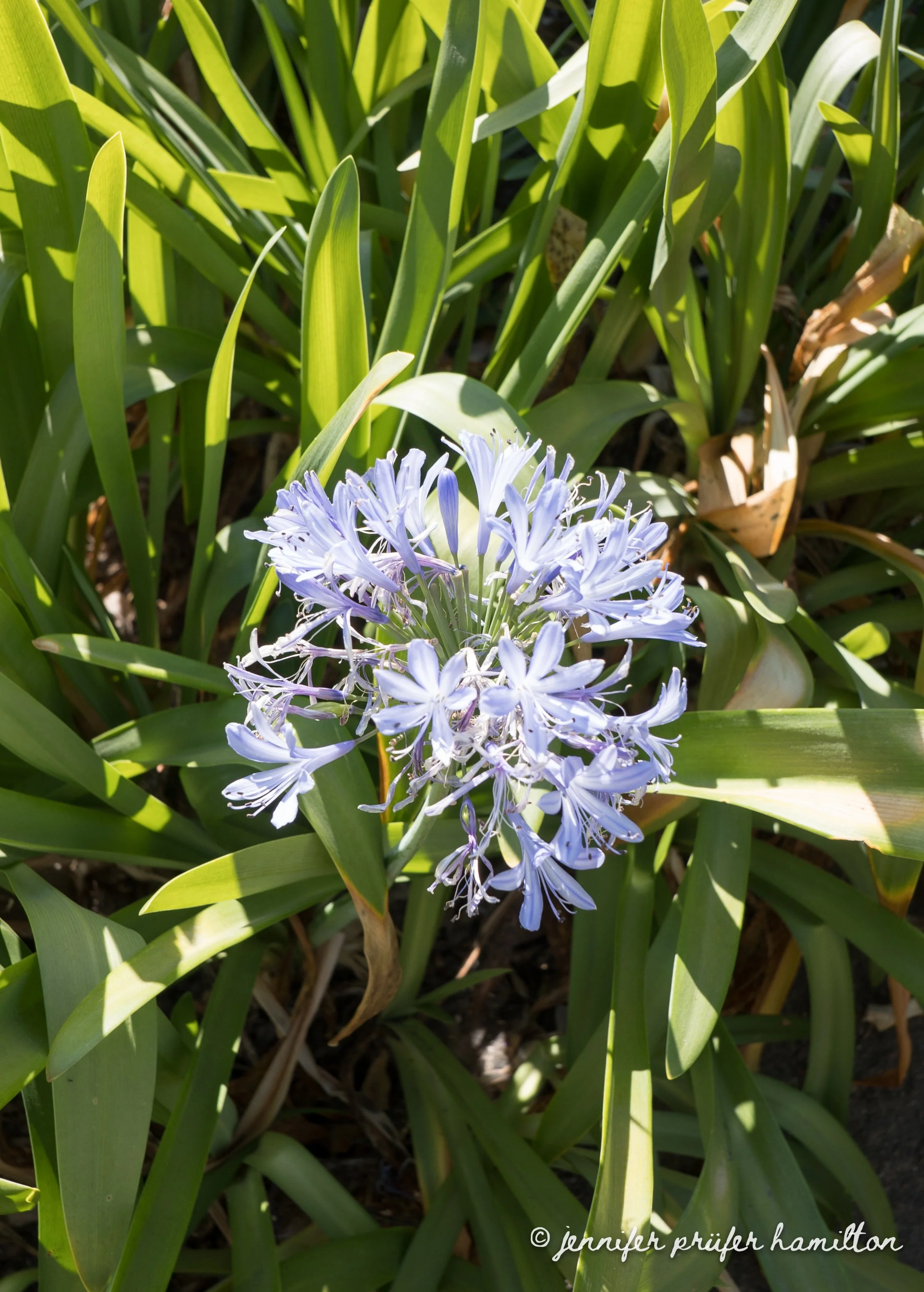
Flax lily flowers
Flax Lily Origin
Flax lily is from temperate and warm regions of Tasmania, Australia.
Flax Lily Care
Soil: Fast draining soil is key. Can tolerate different soil types.
Temperature: Prefers temperate weather. Can withstand temperatures down to 30 degrees for a brief period of time.
Water: Requires moderate water. We recommend occasional, deep waterings. Allow the soil to be dry between waterings, but not for too long. Either use a moisture meter or stick your finger through the soil to gauge the moisture level.
Sun: Full sun to partial shade. Partial shade is recommended in Palm Springs region. Protect from harsh afternoon sun.
Flax Lily Problems
Pests: Flax lily is mostly pest-resistant.
Signs of overwatering: Fewer flowers, root rot
Signs of too little water: Wilting, dropping leaves, brown tips
Signs of too much sun: Fading color, scorched leaves
Signs of too little sun: Etiolation, fewer flowers
Flax Lily Propagation
To propagate flax lily, divide the clump and plant the new sections in moist soil.
FAQ
How much does Flax Lily cost?
At our nursery, flax lily costs $10 for a 1-gallon, $15 for a 5-gallon container.
Prices are subject to change. Please contact us for the most up-to-date information on pricing. We may have larger sizes available. We provide installation services locally at a separate cost.
Can flax lilies withstand cold temperatures?
Flax lilies can withstand temperatures down to frost for a short period of time. Cut back any frost damage. It will likely bounce back in the spring. If you live somewhere with cold winters, bring indoors.
Do flax lilies like sun or shade?
Flax lily performs well in both full sun and partial shade in temperate regions such as San Diego and Santa Barbara. In areas that experience extreme heat, such as Palm Springs and Las Vegas, it performs best when it receives early morning sun and shade for the rest of the day.
Summary
| SIZE (H X W) | 2 feet X 3 feet |
|---|---|
| FLOWER COLOR | Blue-purple |
| FLOWER SEASON | Year round |
| EXPOSURE | Partial Shade |
| WATER | Moderate |
| GROWTH RATE | Slow |
| HARDINESS | 30º F, USDA Zone 9 |
| PRUNING | As Needed |