Fan Aloe
Fan aloe is a fun and memorable succulent due to its striking leaves that unfurl in a fan-like pattern.
One of the most rewarding aspects about keeping this plant in your garden is being able to observe the shrub transform into a tree with wooden trunks and stems as it grows mature.
Botanical name: Aloe plicatilis
Other names: Aloe disticha var. plicatilis, Kumara plicatilis
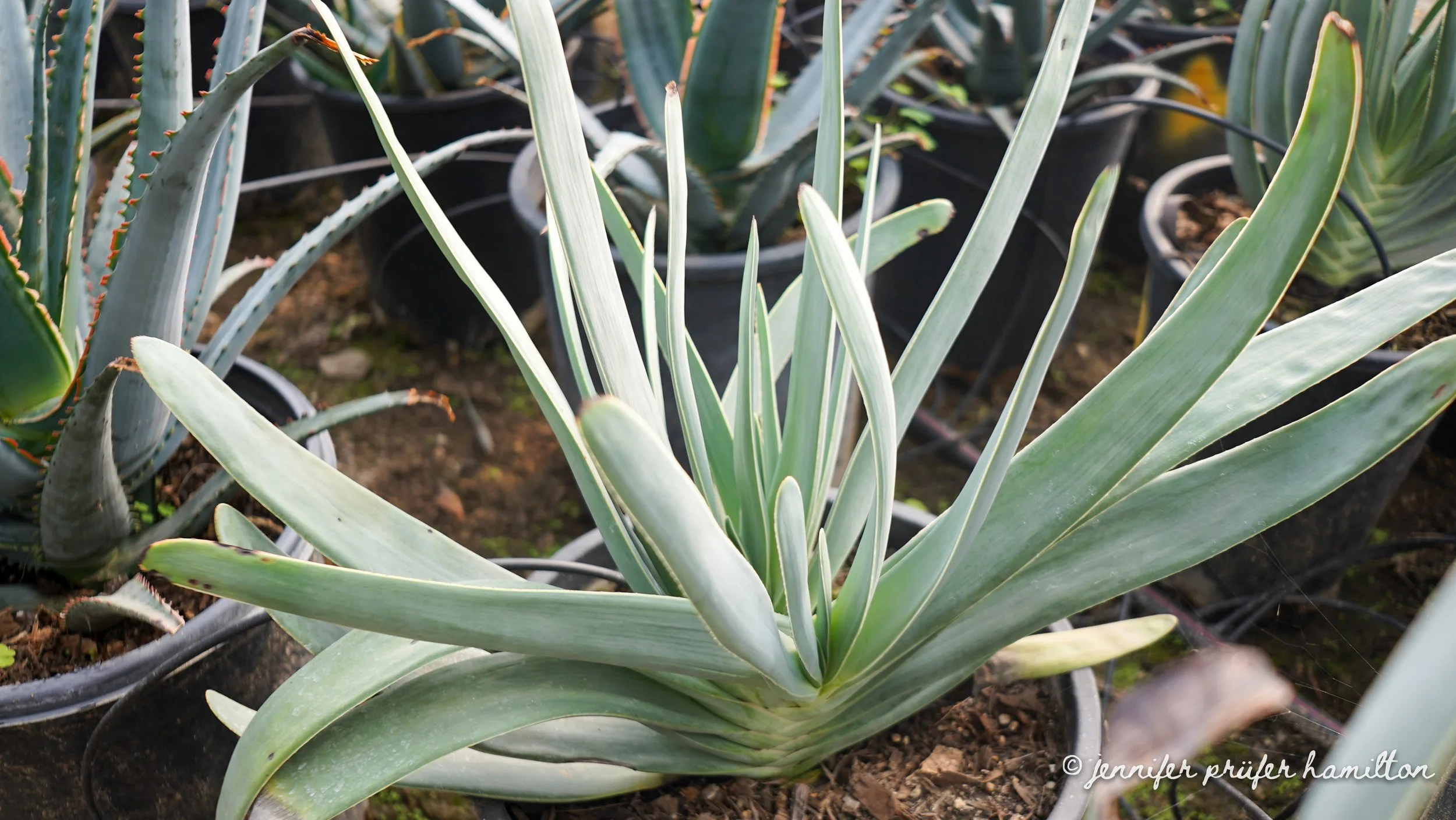
Fan aloe for sale at the nursery
TABLE OF CONTENTS
Fan Aloe Appearance
Fan aloe has a very distinct look. Long muted green leaves with rounded edges grow from a central stem in a fan-like pattern. The name plicatilis means “foldable” in Latin, referring to this interesting pattern in which the leaves appear stacked.
The leaves are succulent and about a foot long. As the plant grows older, old leaves fall off, creating a central woody stem. Typically reaches about 5 feet tall in our region. However, in its original habitat in South Africa, they become tree-like with woody bases and stems and reach over 10 feet tall.
Bright orange-red flowers on several flower stalks when in bloom. Small, tubular flowers. Followed by seed pods that turn to a dark color when they dry up.
Fan Aloe Landscaping Tips
Fan aloe has a very distinct shape and is not found in common landscapes. Great addition for succulent and desert plant collections.
Once mature, creates a spectacle with its many showy flowers that bloom at the same time. Attracts hummingbirds.
Only requires occasional water in coastal regions. Needs more regular water in hot inland areas. The leaves should look succulent. If they look shriveled, it is most likely that it is getting too much sun and too little water.
Performs well in a container. Keeping the aloe in a container will also make it easy to protect it from cold temperatures and heat waves.
Fan aloe is from elevated regions and can withstand cold temperatures down to 20-22 degrees Fahrenheit.
Fan Aloe Origin
Fan aloe is from warm mountain regions in South Africa.
Fan Aloe Care
Soil: Loose, well-draining soil that is lightly fertile.
Temperature: Can withstand temperatures down to 22 degrees for a short period of time.
Water: Regular watering during the hottest months in inland areas. Allow the soil to dry out between waterings. Either use a moisture meter or stick your finger through the soil to gauge the moisture level. Only requires occasional watering during cooler months.
Sun: Full sun. Partial shade in the Palm Springs area and other hot desert regions.
Fan Aloe Problems
Pests: Fan aloe has minimal pests which include aphids. Blast them off with water if the infestation is light. Otherwise, use horticultural oil or soapy water.
Whenever using any kind of pesticide, be aware that it can damage the plant if the temperatures are in the 80s or above.
Fungal diseases from root rot, dry rot, and harsh weather conditions.
Signs of overwatering: Drooping, squishy texture, surrounding soil that does not dry out
Signs of too little water: Shriveled appearance, browning leaves
Signs of too much sun: Burning, fading leaves
Signs of too little sun: Etiolation, stunted growth
Fan Aloe Propagation
Obtain seeds after the fan aloe has fruited and plant them in soil.
FAQ
How much does a Fan aloe cost?
At our nursery, fan aloe costs $35 for a 5-gallon container, $85 for a 15-gallon container.
Prices are subject to change. Please contact us for the most up-to-date information on pricing. We may have larger sizes available. We provide installation services locally at a separate cost.
Do I need to prune fan aloes?
There is no need to prune fan aloes other than the occasional diseased or damaged leaf.
Does fan aloe flower?
Yes, it blooms many tubular red-orange flowers as is typical on aloe plants, attracting hummingbirds.
Summary
| SIZE (H X W) | 5-8 feet x 4-7 feet |
|---|---|
| FLOWER COLOR | Red-orange |
| FLOWER SEASON | Winter to Spring |
| EXPOSURE | Full Sun/Partial Shade |
| WATER | Low/Moderate |
| GROWTH RATE | Slow |
| HARDINESS | 22º F, USDA Zone 8 |
| PRUNING | None |