Euphorbia Cereiformis
Euphorbia cereiformis gets its name from its candle-shaped stems. They grow vertically and have a cylindrical shape.
Although it is sometimes called “milk barrel cactus,” there are a few euphorbias that share that nickname, so we often use the botanical name at the nursery.
The plant’s deep green stems and their deep grooves along the sides provide lots of texture and visual interest, but the real reward with keeping this plant is watching it grow into a large clump that looks very intriguing.
Botanical name: Euphorbia cereiformis
Other names: Milk barrel cactus, milk barrel euphorbia
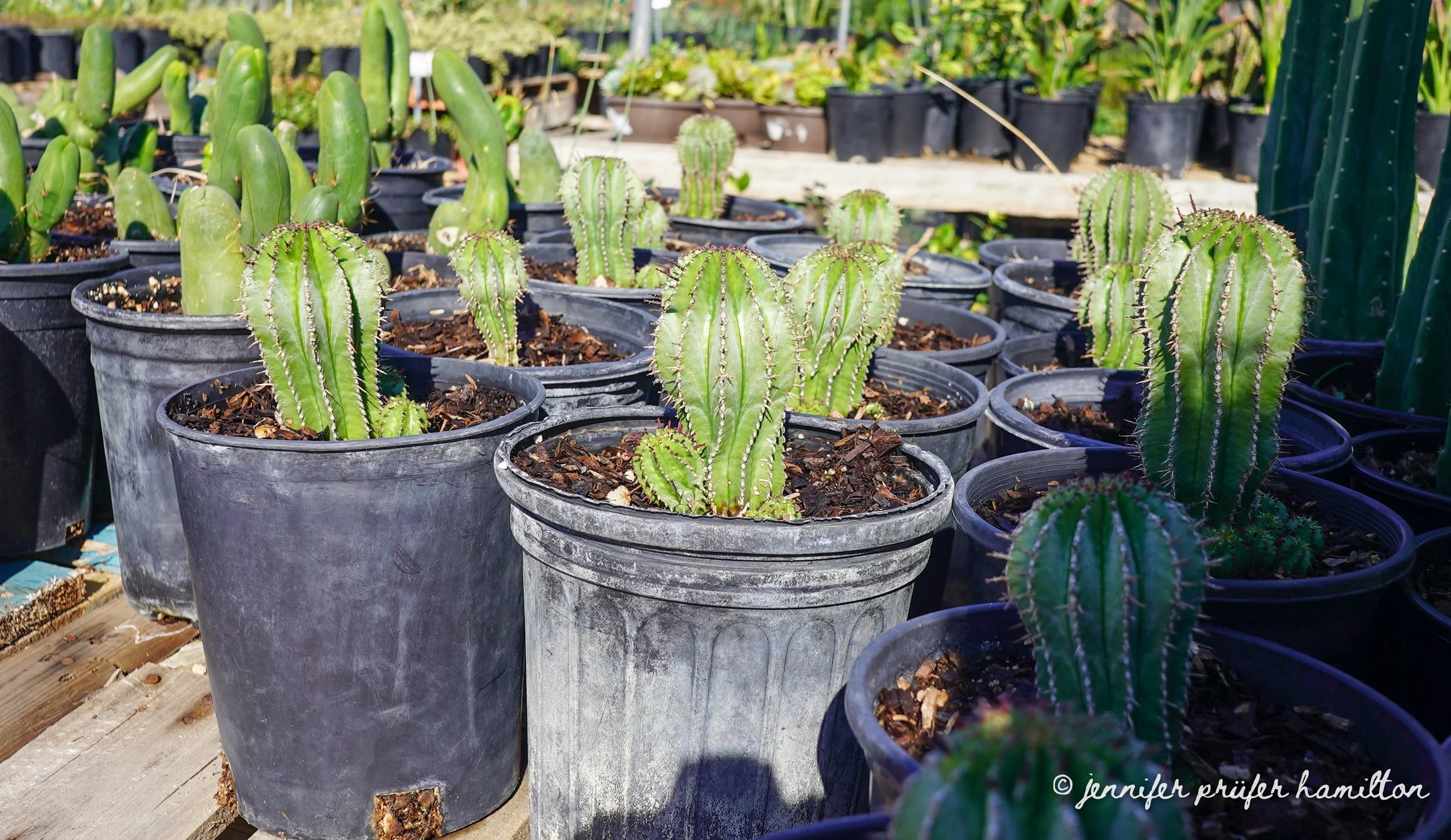
Euphorbia cereiformis for sale at the nursery
TABLE OF CONTENTS
Euphorbia Cereiformis Appearance
Euphorbia cereiformis is a short and columnar euphorbia. Although it is nicknamed “milk barrel cactus,” it is not a cactus but a related plant type called a euphorbia. One common distinction is that euphorbias exude toxic, white sap if damaged.
Euphorbia cereiformis typically reaches 1-2 feet in height. It produces many offsets from its base, forming a dense clump.
The stems are deep green and have deep grooves. They are small, and reach up to 1.5 inches in diameter depending on how much space they have to spread out. Overall, the stems are cylindrical, but these grooves create an almost star-like shape when viewed from above. Numerous, short spines grow alongside the ridges.
Small, inconspicuous green leaves appear at the top of new growth during warm seasons for a brief time.
Tiny dark red-brown flowers appear in clusters at the top of the branches when in bloom.
Euphorbia Cereiformis Landscaping Tips
Euphorbia cereiformis is a rare plant with an unusual appearance. Great for a succulent collection.
Looks and performs great in containers. Use a wide container to allow the euphorbia to grow a dense clump. Because each stem grows mostly vertically, it stays neatly without spilling over to the sides.
Performs well indoors. Provide lots of bright light.
If you live in a warm and dry region, such as the Coachella Valley, you can grow the euphorbia outdoors. Provide shade from the afternoon sun to maintain the deep green color. Bring indoors if the temperature gets down to below frost.
Toxic, white latex beneath the outer layer. Careful with handling the plant since the sap is very toxic.
Euphorbia Cereiformis Origin
Milk barrel cactus is from warm and dry parts of South Africa.
Euphorbia Cereiformis Care
Soil: Loose, well-draining soil that is moderately fertile.
Temperature: Can withstand temperatures down to frost (= 32 degrees) for a short period of time.
Water: Occasional, deep watering. Allow the soil to completely dry out between waterings. Either use a moisture meter or stick your finger through the soil to gauge the moisture level. It’s better to err on the side of underwatering than overwatering.
Sun: Full sun or partial shade in the Palm Springs area.
Euphorbia Cereiformis Problems
Pests: Euphorbia cereiformis is mostly pest-resistant.
Signs of overwatering: Drooping, squishy texture
Signs of too little water: Shriveling, drying skin
Signs of too much sun: Burning, scarring, fading color, browning
Signs of too little sun: Etiolation, discoloring
Euphorbia Cereiformis Propagation
Carefully remove an offset or cut off a stem with gloves and tools since it will leak toxic, white sap. Allow stem cutting to dry out for several days to prevent rot. Plant in soil.
FAQ
How much does Euphorbia Cereiformis cost?
At our nursery, Euphorbia cereiformis costs $10 for a 1-gallon container, $35 for a 5-gallon container, and $50 for a 15-gallon container.
Prices are subject to change. Please contact us for the most up-to-date information on pricing. We may have larger sizes available. We provide installation services locally at a separate cost.
How big does Euphorbia Cereiformis get?
Euphorbia cereiformis typically reaches 1-2 feet in height. Each branch is about 1.5 inches wide depending on how much space it has to spread.
Is Euphorbia Cereiformis toxic?
Yes, it has white milky sap, which is toxic.
Summary
| SIZE (H X W) | 1-2 feet |
|---|---|
| FLOWER COLOR | Yellow |
| FLOWER SEASON | Infrequent |
| EXPOSURE | Full to Partial Sun |
| WATER | Low |
| GROWTH RATE | Moderate |
| HARDINESS | 32º F, USDA Zone 10 |
| PRUNING | None |