Dyckia Platyphylla
Dyckia platyphylla is a succulent from semi-arid regions of Brazil. It has adapted to heat and drought by storing water in its leaves and roots.
Reaching only half a foot tall and 1 foot wide, it makes for an easy plant to grow in many small areas like windowsills, garden borders, and near walkways.
Botanical name: Dyckia platyphylla
Other names: Wide leaf dyckia, wide leafed dyckia
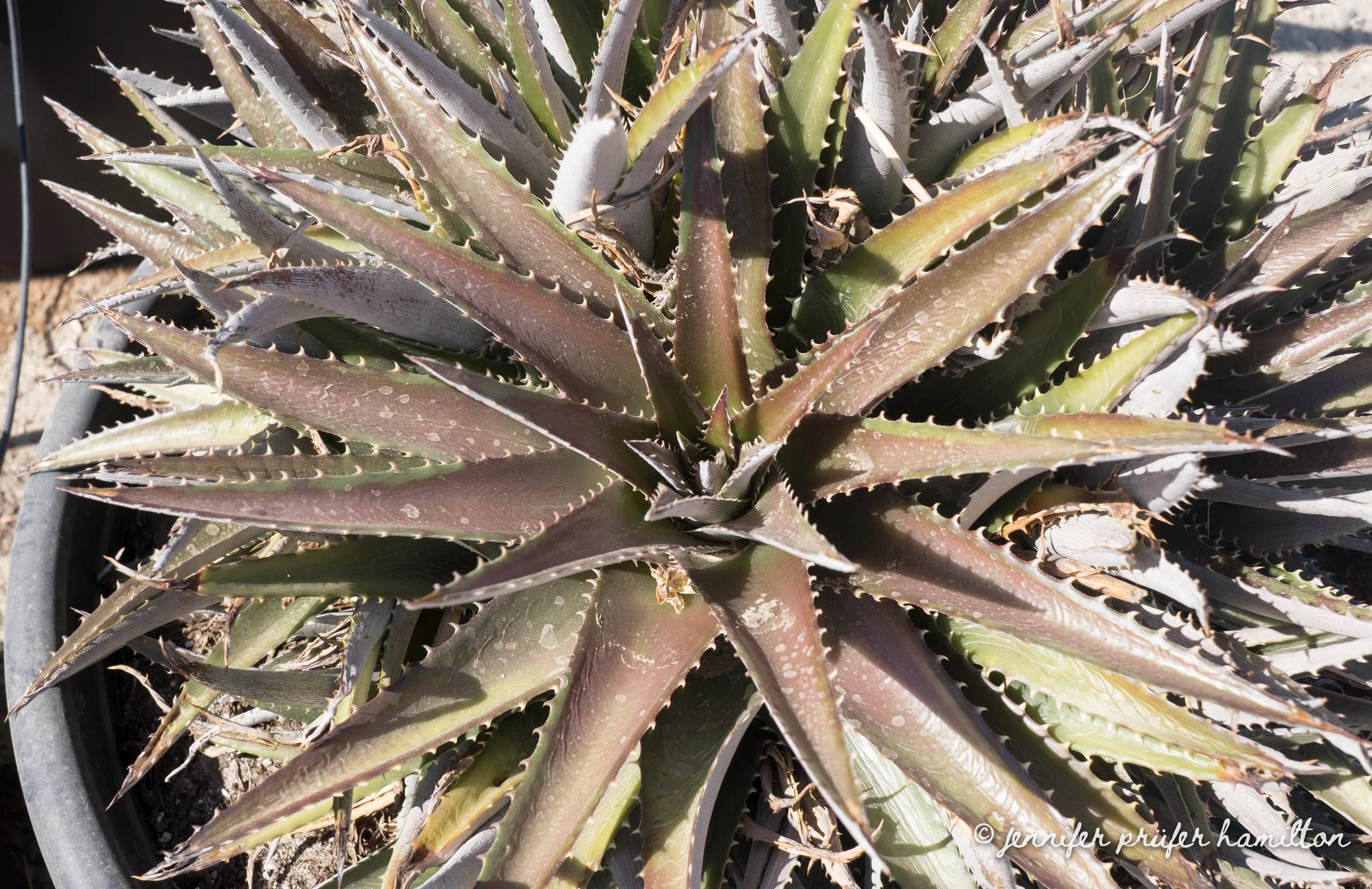
Close up look at dyckia platyphylla
TABLE OF CONTENTS
Dyckia Platyphylla Appearance
Dyckia platyphylla is a succulent in the bromeliad family. It is often confused with agaves because of its fleshy leaves and symmetrical rosette shape. The genus dyckia is related to the plant collector’s geographic origin in Germany and the word platyphylla refers to the wide and flat shape of its leaves.
Evergreen leaves are dark green. They become more brown or purple when it gets lots of sun and/or less water. The sides of the leaves are covered with teeth that are moderately sharp.
Clumping growth habit. The individual plants are small, reaching 0.5 foot tall and 1 foot wide.
Blooms in the spring. The flowers are usually red or orange and grow in clusters on a 2 foot tall flower stalk that emerges from the center.
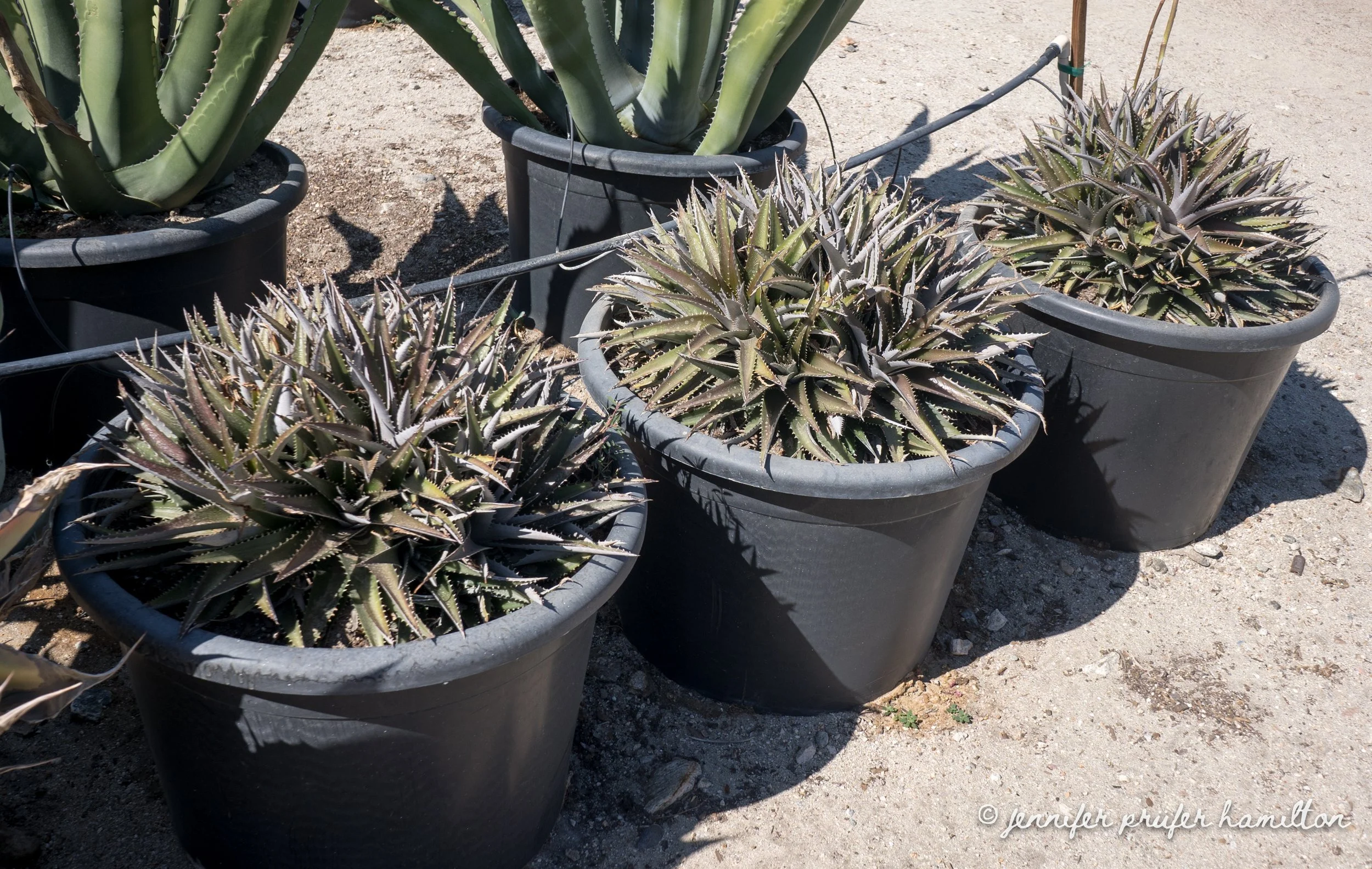
Dyckia platyphylla for sale at the nursery
Dyckia Platyphylla Landscaping Tips
Dyckia platyphylla looks great in rock gardens and desert themed gardens.
Good candidate for small spaces and garden borders.
They also make for easy, low-maintenance houseplants.
Keep in containers to keep them looking tidy or to bring indoors if your region experiences long stretches of periods with below frost temperatures.
Provide shade from intense afternoon sun during extreme heat.
Attracts pollinators such as bees and hummingbirds when in bloom.
Dyckia Platyphylla Origin
Dyckia platyphlla is from semi arid regions of Brazil.
Dyckia Platyphylla Care
Soil: Loose, well-draining soil that is lightly fertile.
Temperature: Dyckia platyphlla can withstand temperatures down to 25 degrees Fahrenheit.
Water: Apply occasional, deep watering. Allow the soil to dry out completely between waterings. Use a moisture meter or stick your finger through the soil to gauge the moisture level. It’s better to err on the side of underwatering than overwatering.
Sun: Full sun in most regions. Partial shade is best in the Palm Springs region.
Dyckia Platyphylla Problems
Pests: Dyckias attract minimal pests. Fungal diseases from root rot, dry rot, and harsh weather conditions.
Signs of overwatering: Drooping, squishy texture
Signs of too little water: Shriveling, drying skin
Signs of too much sun: Burning, scarring, fading color
Signs of too little sun: Etiolation, discoloring.
Dyckia Platyphylla Propagation
The easiest way to propagate dyckias is by removing its offsets.
FAQ
How much does a Dyckia Platyphylla cost?
At our nursery, dyckia platyphylla costs $10 for a 1-gallon container, $35 for a 5-gallon container, $85 for a 15-gallon container and $175 for a 24 inch box.
Prices are subject to change. Please contact us for the most up-to-date information on pricing. We may have larger sizes available. We provide installation services locally at a separate cost.
Can Dyckia Platyphyllas be grown outdoors?
Yes, if you live in a climate that does not experience long stretches of periods with below frost temperatures. If you do, keep it in a container and bring it indoors during the cold seasons.
Does a Dyckia Platyphylla grow offsets?
Yes, which makes propagating and sharing very easy.
Summary
| SIZE (H X W) | 0.5 X 1 feet |
|---|---|
| FLOWER COLOR | Red, orange |
| FLOWER SEASON | Spring |
| EXPOSURE | Full Sun, Partial Shade |
| WATER | Low |
| GROWTH RATE | Slow |
| HARDINESS | 25 F, USDA Zone 9 |
| PRUNING | None |