Desert Lavender
Desert lavender is one of our top recommendations for those seeking a native flowering desert shrub.
The purple flowers are a welcome sight in the springtime and the silvery green leaves provide a calming presence and fragrance year round.
Botanical name: Condea emoryi
Other names: Hyptis emoryi
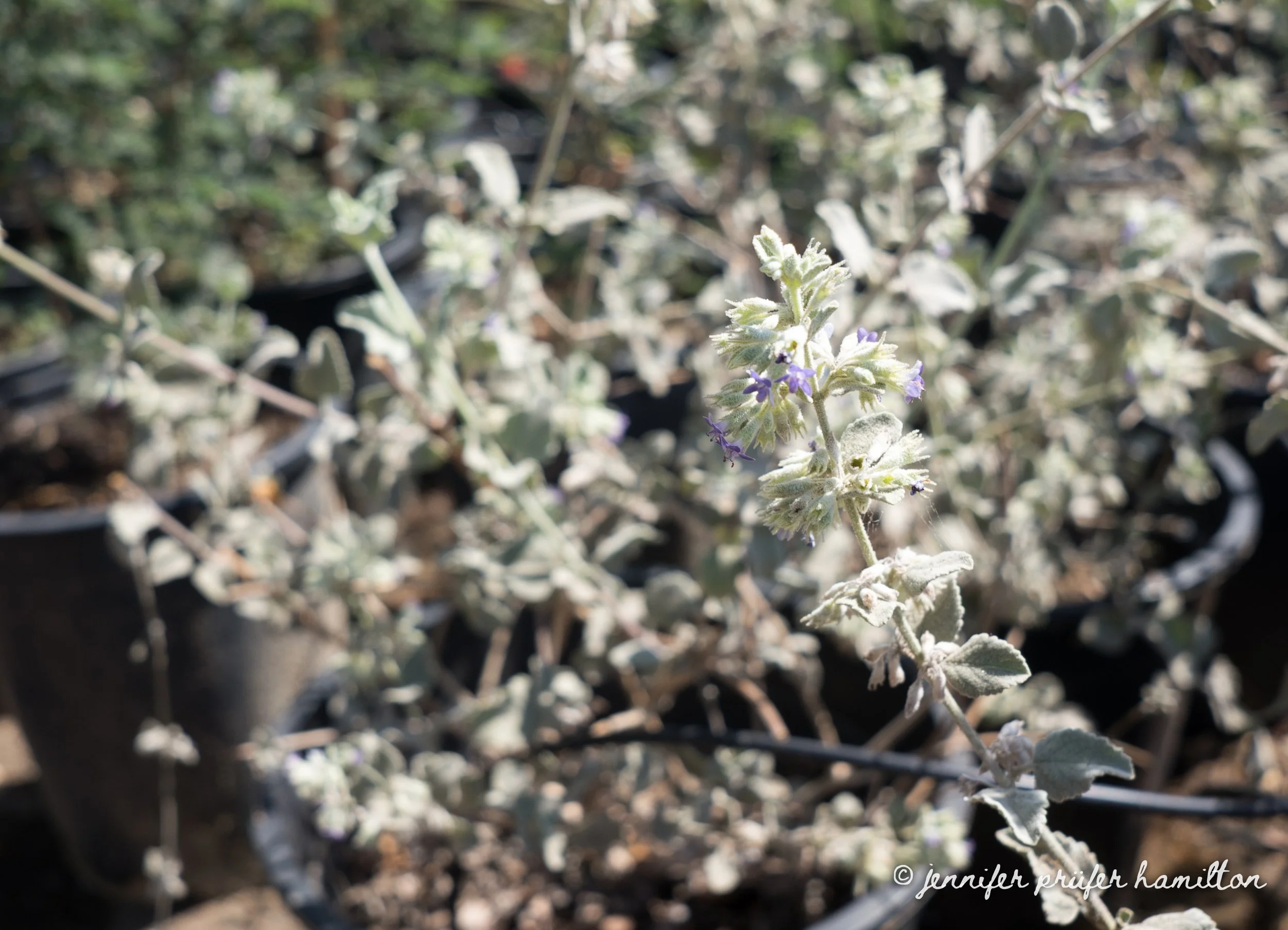
Desert lavender in bloom
TABLE OF CONTENTS
Desert Lavender Appearance
Desert lavender is in the mint family and shares that group's tendency to be resilient and fragrant.
Medium to large desert shrub, which grows to 5-10 feet in height and width. It is mostly upright and spreads horizontally by growing many stems.
Deep and extensive root system.
Light mint green stems become dark and woody as they age.
Small tear drop shaped leaves have scalloped edges. They are also light mint green and are fuzzy to help reduce evaporation.
Desert lavender is a perennial. It blooms in the springtime.
Small purple flowers grow in clusters on flower stalks.
Followed by tiny brown fruits and seeds.
Desert Lavender Landscaping Tips
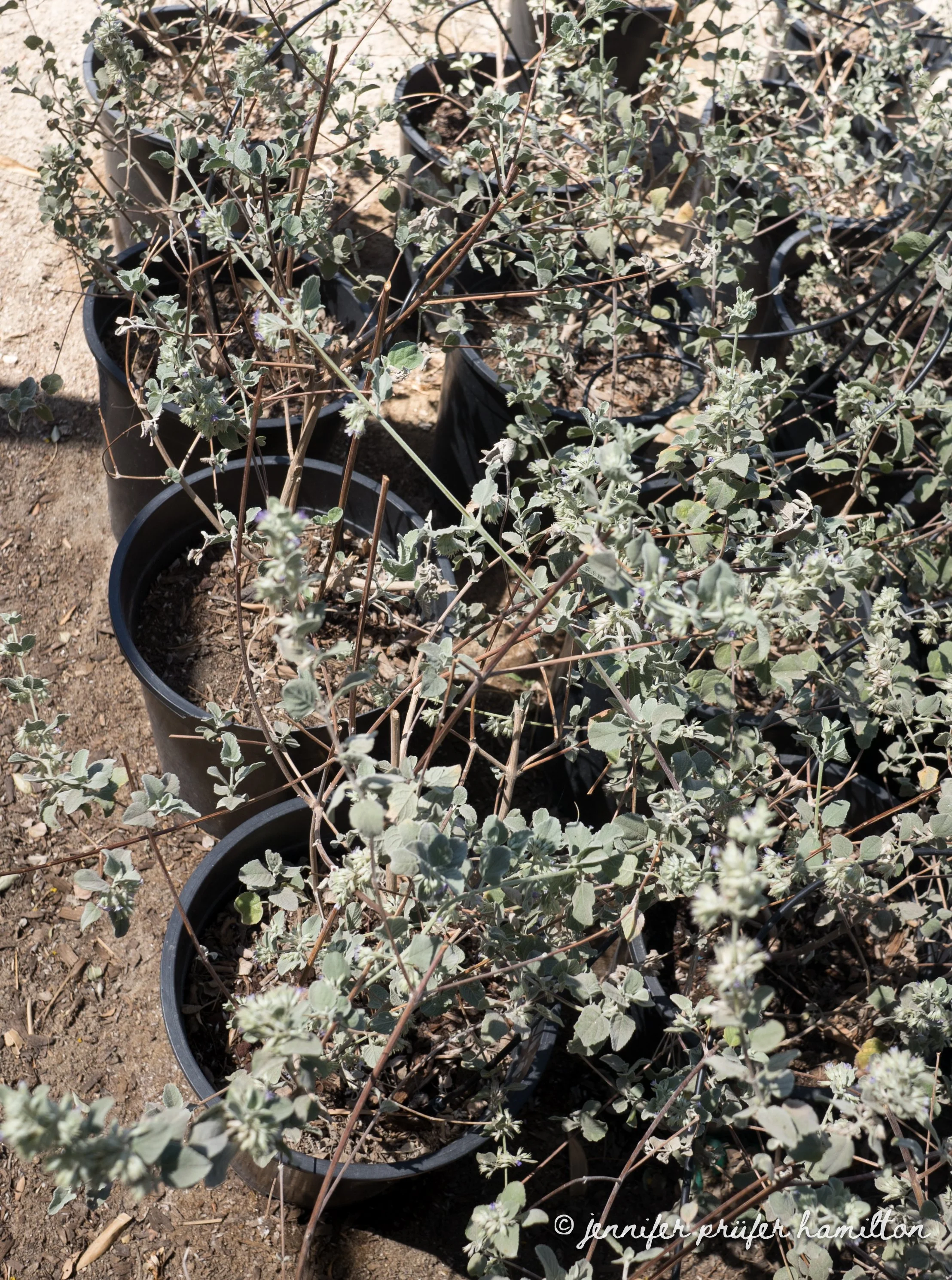
Desert lavender for sale
Very drought tolerant. Provide occasional deep watering, especially during heat waves to keep it looking full and healthy.
Both the leaves and the flowers give off a pleasant fragrance. Gently crush them between your fingers to release a noticeably stronger scent.
An important nectar source for local bees and butterflies.
Has deep roots that help control erosion.
Sheds leaves during extreme heat.
Desert Lavender Origin
Desert lavender is from the desert areas of California, Nevada, Arizona, and northern Mexico.
Desert Lavender Care
Soil: Well-draining soil is very important for this plant.
Temperature: Can withstand temperatures down to 25 degrees for a short period of time. Performs well in the heat.
Water: Low watering needs. Provide deep watering in the summertime and allow for the soil to completely dry out before watering again. Water sparingly during cool weather.
Sun: Full sun. Partial shade is ok in the Palm Springs area.
Desert Lavender Problems
Pests: Desert lavender has minimal pests. Fungal diseases from root rot, dry rot, and harsh weather conditions.
Signs of overwatering: Squishy texture
Signs of too little water: Shriveling, drying
Signs of too much sun: Burning, scarring, fading color
Signs of too little sun: Etiolation, few blooms
Desert Lavender Propagation
Propagate desert lavender via seeds.
FAQ
How much does Desert Lavender cost?
At our nursery, desert lavender is available for $25 in a 5-gallon container and $50 in a 15-gallon container.
Prices are subject to change. For the most up-to-date pricing information, please get in touch with us. We may have larger sizes available. We provide installation services locally at a separate cost.
Do i need to water Desert Lavender?
Desert lavender is from our region and has adapted to extreme heat and drought. However, to keep the plant looking full and healthy year round, it is recommended to provided deep watering during heat waves and when it has a shriveled appearance.
How should I prune Desert Lavender?
Provide pruning as needed to keep the desert shrub looking tidy if desired. Perform heavy pruning in the fall or winter.
Summary
| SIZE (H X W) | 10 feet X 8 feet |
|---|---|
| FLOWER COLOR | Purple |
| FLOWER SEASON | Spring |
| EXPOSURE | Full Sun to Partial Shade |
| WATER | Low |
| GROWTH RATE | Moderate |
| HARDINESS | 25º F, USDA Zone 8 |
| PRUNING | As Needed |