Crape Myrtle
Crape myrtles are originally from China and India, but are now a familiar sight in many warm regions in the United States.
Gardeners love them for their beautiful blooms that often last several months as well as their tolerance for a wide range of temperatures from -5 degrees Fahrenheit to triple digit heat.
Botanical name: Lagerstroemia indica
Other names: Crape myrtle flower, crepe myrtle, crepe paper flower, lagerstroemia chinensis
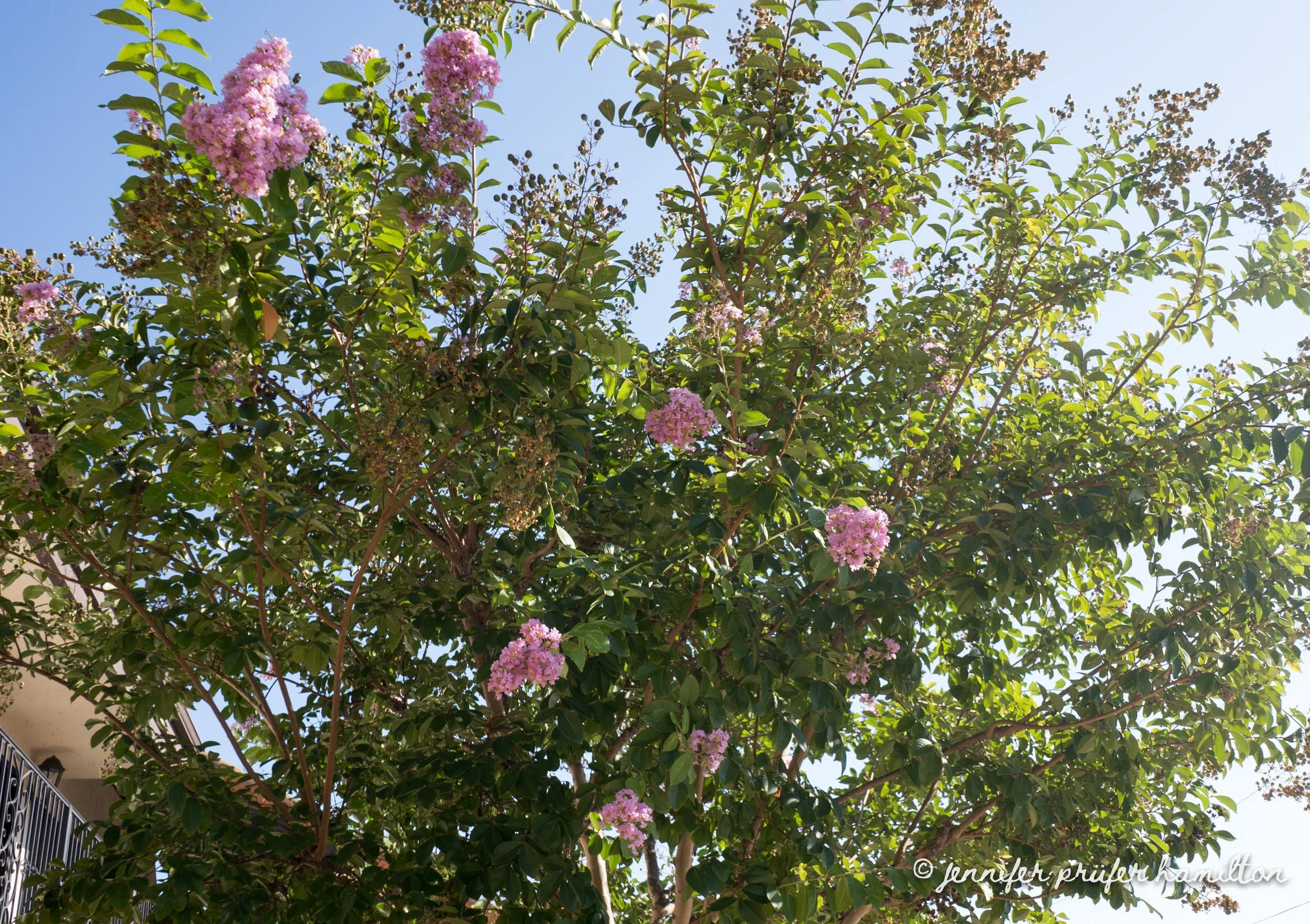
Blooming pink crape myrtle
TABLE OF CONTENTS
Crape Myrtle Appearance
Crape myrtle is an ornamental tree prized for its beautiful, long lasting blooms. Depending on the variety, it can grow to 30 feet tall and wide. Dwarf varieties grow to less than 10 feet tall.
It’s a deciduous tree in most regions that experience cooler weather, but retains most of its leaves during the winter in our area.
Rough gray trunk becomes smooth as it sheds bark over time.
Small tear-drop shaped leaves are medium green on most varieties. They turn yellow or red during cooler weather before shedding.
Blooms numerous showy flowers at the tip of branches from spring to summer. The most common flower colors are pink, purple, and red. The flower petals are thin and wrinkled, which gave it the nickname “crepe paper flower.”
Followed by tiny brown fruits containing seeds.
Crape Myrtle Landscaping Tips
One of the more common ornamental trees in California, especially in commercial and recreational spaces.
Hardy tree that resists cold temperatures down to -5 degrees and triple digit heat. Pest and deer resistant.
Enjoy its long lasting blooms that span 3 months.
Attracts pollinators, including bees, hummingbirds, and butterflies.
Do not plant near pools since the shedding from the leaves, flowers, and bark gets messy.
Remove suckers from time to time to keep the tree looking tidy and less shrubby.
Although drought-tolerant once mature, it prefers its surrounding soil to not become bone dry. Add mulch at the top of the soil to keep some moisture in.
Crape Myrtle Origin
Crape myrtle is from warm regions in China and India
Crape Myrtle Care
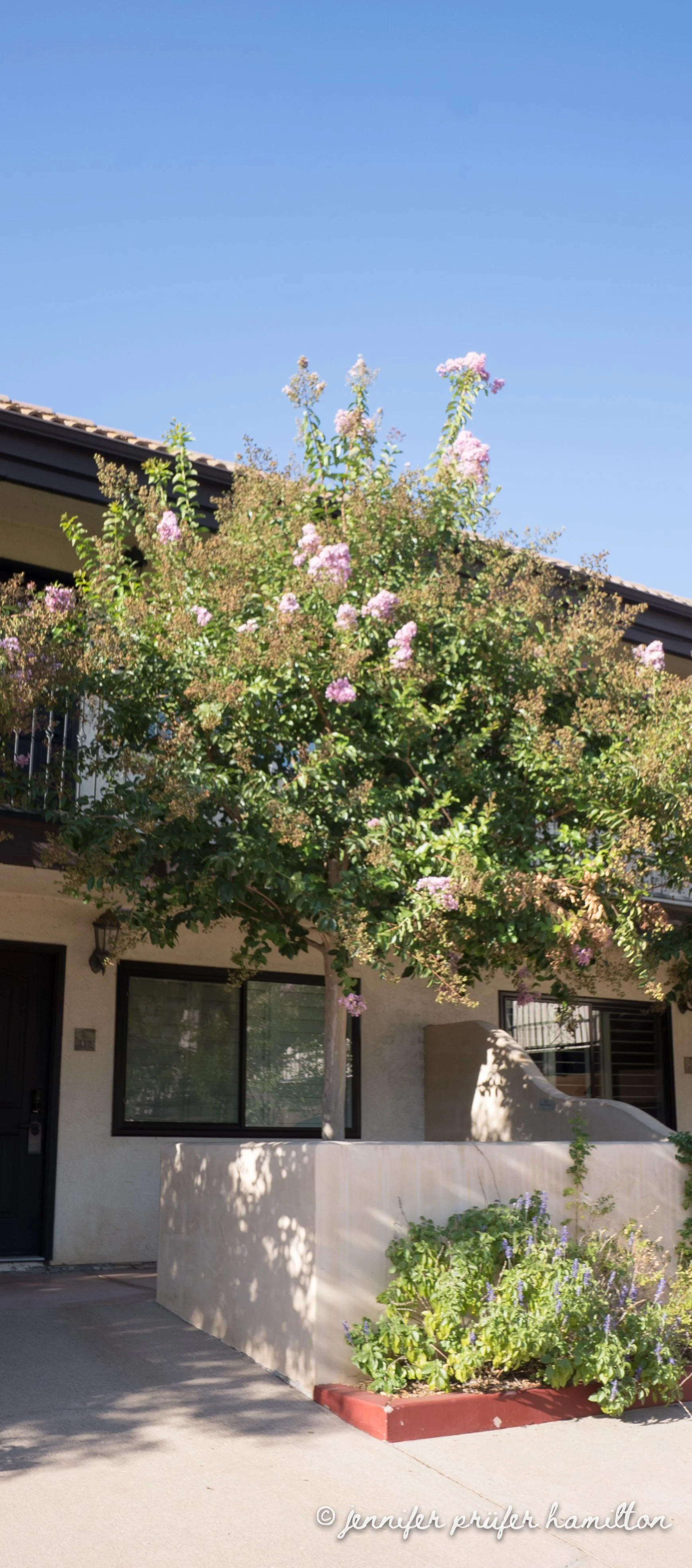
Blooming crape myrtle tree
Soil: Well-draining soil that is moderately fertile.
Temperature: Can withstand temperatures as low as -5 degrees for a short period.
Water: Apply occasional, deep watering. Do not allow the soil to completely dry out between waterings. Use a moisture meter or soil probe to gauge the moisture level.
Sun: Full sun. Partial shade in the Palm Springs area is ok.
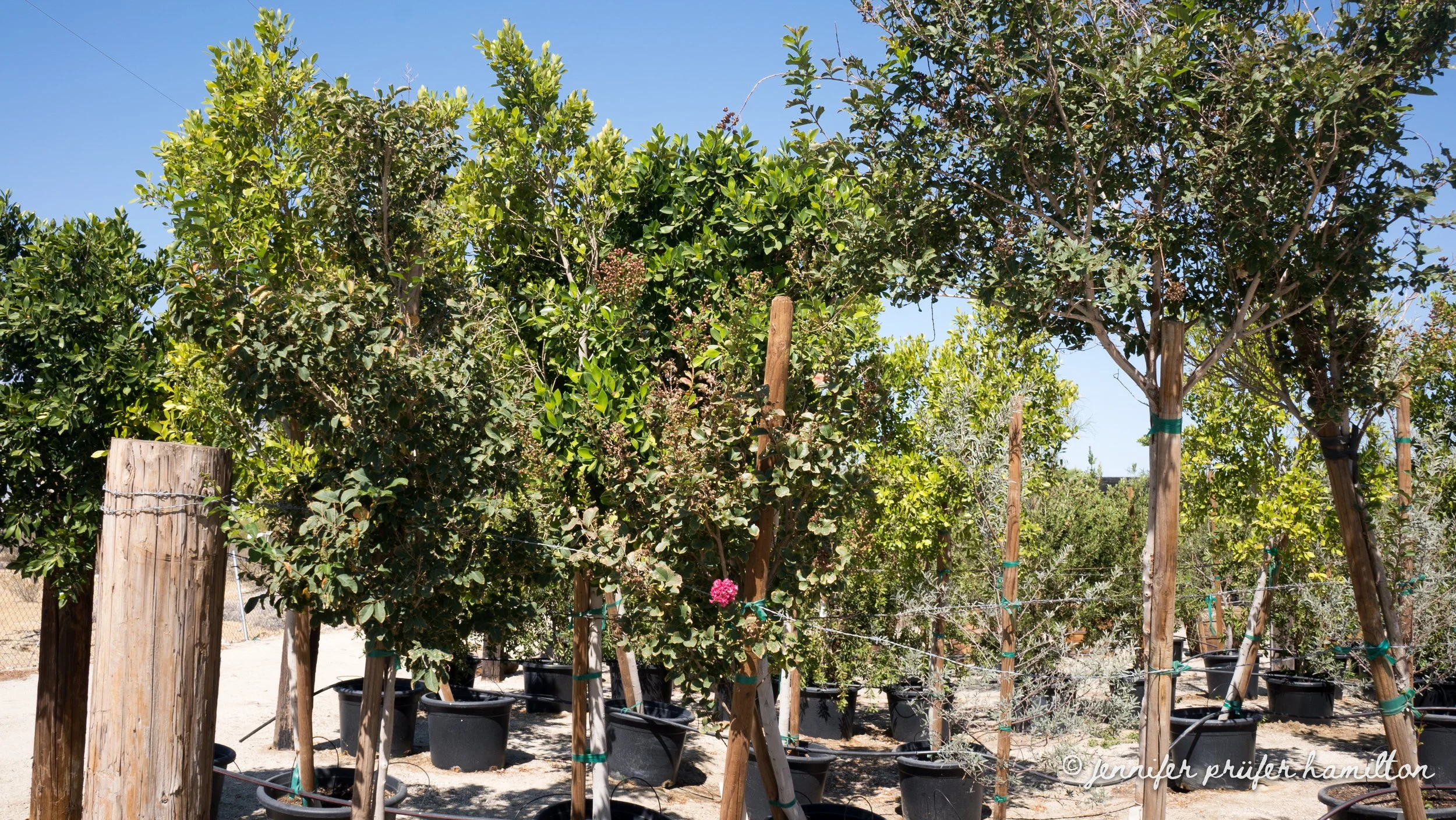
Crape myrtle for sale at the plant nursery
Crape Myrtle Problems
Pests: Pests include spider mites. Control the infestation as soon as it’s discovered. Some options are horticultural oil applied several days apart, as well as insecticidal soap combined with hydrogen peroxide.
Whenever using any pesticide, be aware that it can damage the plant if the temperatures are in the 80s or above.
Fungal diseases from root rot, dry rot, and harsh weather conditions.
Signs of overwatering: Drooping, squishy texture, weak branch growth, leaf drop
Signs of too little water: Shriveling, drying skin, leaf drop
Signs of too much sun: Burning, scarring, fading color
Signs of too little sun: Etiolation, discoloring, lack of flowers
Crape Myrtle Propagation
Obtain seeds from the ripe seed pods or obtain 6 inch cuttings and plant in moist soil.
FAQ
How much does a Crape Myrtle cost?
At our nursery, a crape myrtle tree costs $35 for a 5-gallon container, $95 for a 15-gallon container, $200 for a 24 inch box, $500 for a 36-inch box, $1,250 for a 48-inch box and $2,500 for a 60-inch box.
Prices are subject to change. Please contact us for the most up-to-date information on pricing. We may have larger sizes available. We provide installation services locally at a separate cost.
What is the lifespan of Crape Myrtles?
Crape myrtles have a long lifespan over 100 years long.
Are Crape Myrtles drought-tolerant?
Crape myrtles are drought tolerant once mature. However, they look full and lush with regular watering.
Summary
| SIZE (H X W) | 30 feet x 30 feet |
|---|---|
| FLOWER COLOR | Pink, purple, red |
| FLOWER SEASON | Spring to Summer |
| EXPOSURE | Full Sun |
| WATER | Moderate |
| GROWTH RATE | Fast |
| HARDINESS | -5º F, USDA Zone 6 |
| PRUNING | As Needed |