Brittlebush
Chances are, if you see a blanket of yellow flowering shrubs in our local mountains and hillsides after a good desert rain, it’s brittlebush.
It’s one of the most recognizable native plants we have in the Coachella Valley, alongside creosote and ocotillo.
It’s beautiful and very heat-tolerant, making it an excellent choice for desert landscaping. It supports local wildlife such as butterflies and rabbits, too.
Botanical name: Encelia farinosa
Other names: Brittle bush, incienso, tohaws
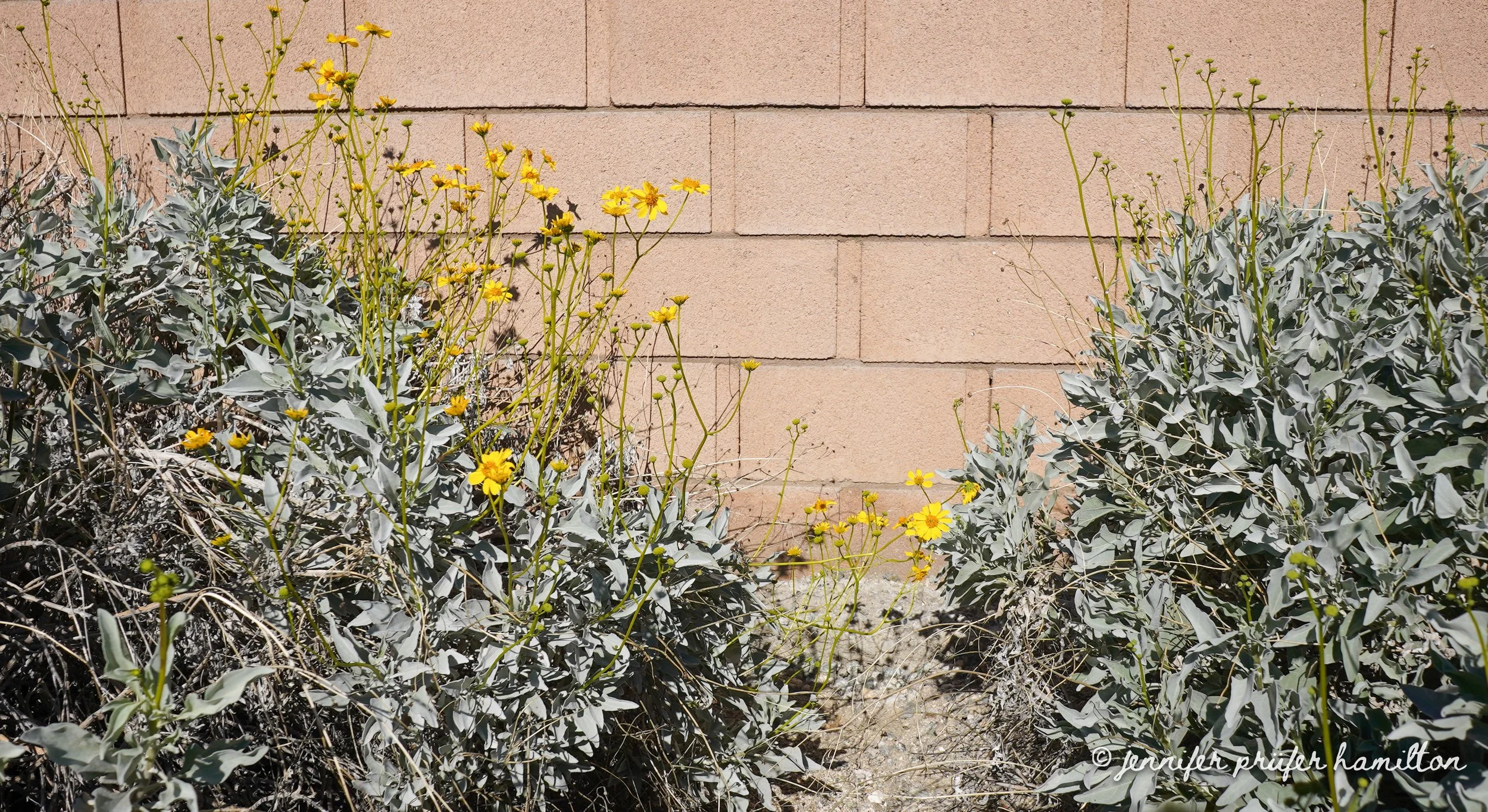
Brittlebush in bloom
TABLE OF CONTENTS
Brittlebush Appearance
Brittlebush is a flowering desert shrub that grows to about 5 feet tall and 6 feet wide.
Multi-stemmed with brittle branches (hence the name). Old brittlebushes develop more rigid branches at the base. Overall rounded shape and dense leaves and flowers.
Small, two-inch-long leaves that feel like velvet. Silvery hairs help to protect it from harsh sunlight and minimize water evaporation.
Small, bright yellow flowers bloom with mild weather. Followed by seedpods that contain numerous small seeds.
Brittlebush Landscaping Tips
Helps support local populations, including bees, butterflies, bighorn sheep, and rabbits.
Blends very well with cacti and agaves in desert and rock-themed gardens.
Historically used for burning incense, hence the nickname incienso. The resin has a strong woodsy and herbal aroma.
Grows very fast in the Coachella Valley. Reseeds readily.
When transplanting, dig a large hole and keep as much soil from the nursery container as possible to minimize stress.
Will drop leaves if exposed to below frost temperatures or triple digit extreme heat for an extended period of time. Bounces back quickly with the return of more favorable weather.
Brittlebush Origin
Brittlebush originates from the Southwest, USA and northern Mexico in areas that are mostly hot and dry.
Brittlebush Care
Soil: Loose, well-draining soil.
Temperature: Can withstand temperatures down to 27 degrees for a short period of time. Does very well in heat.
Water: Apply occasional, deep watering. Allow the soil to dry out completely between waterings. Use a moisture meter or stick your finger through the soil to gauge the moisture level. It’s better to err on the side of underwatering than overwatering.
Sun: Full sun
Brittlebush Problems
Pests: Brittlebush has minimal pests, which include aphids. To control aphids, blast them off with water if the infestation is light. Otherwise, use horticultural oil or soapy water. Repeated application is necessary to disrupt their life cycles.
Whenever using any pesticide, be aware that it can damage the plant if the temperatures are in the 80s or above.
Signs of overwatering: Drooping, squishy texture, browning or yellowing leaves
Signs of too little water: Drooping, shriveled leaves
Signs of too much sun: Burning, fading leaves
Signs of too little sun: Etiolation, discoloration
Brittlebush Propagation
To propagate brittlebush, obtain seeds after the seedpods have ripened and plant in soil.
FAQ
How much does Brittlebush cost?
At our nursery, brittlebush costs $20 for a 5-gallon container and $50 for a 15-gallon container.
Prices are subject to change. Please contact us for the most up-to-date pricing information. We may have larger sizes available. We provide installation services locally at a separate cost.
What is the lifespan of Brittlebush?
Brittlebush has a lifespan of 20-25 years.
Is Brittlebush edible?
Native Americans have used brittlebush for many medicinal purposes such as sinus congestion and toothaches. Consult with an expert before using the brittlebush for medicine.
Summary
| SIZE (H X W) | 5 feet x 6 feet |
|---|---|
| FLOWER COLOR | Yellow |
| FLOWER SEASON | Year Round |
| EXPOSURE | Full Sun |
| WATER | Low |
| GROWTH RATE | Fast |
| HARDINESS | 27º F, USDA Zone 8 |
| PRUNING | As needed |